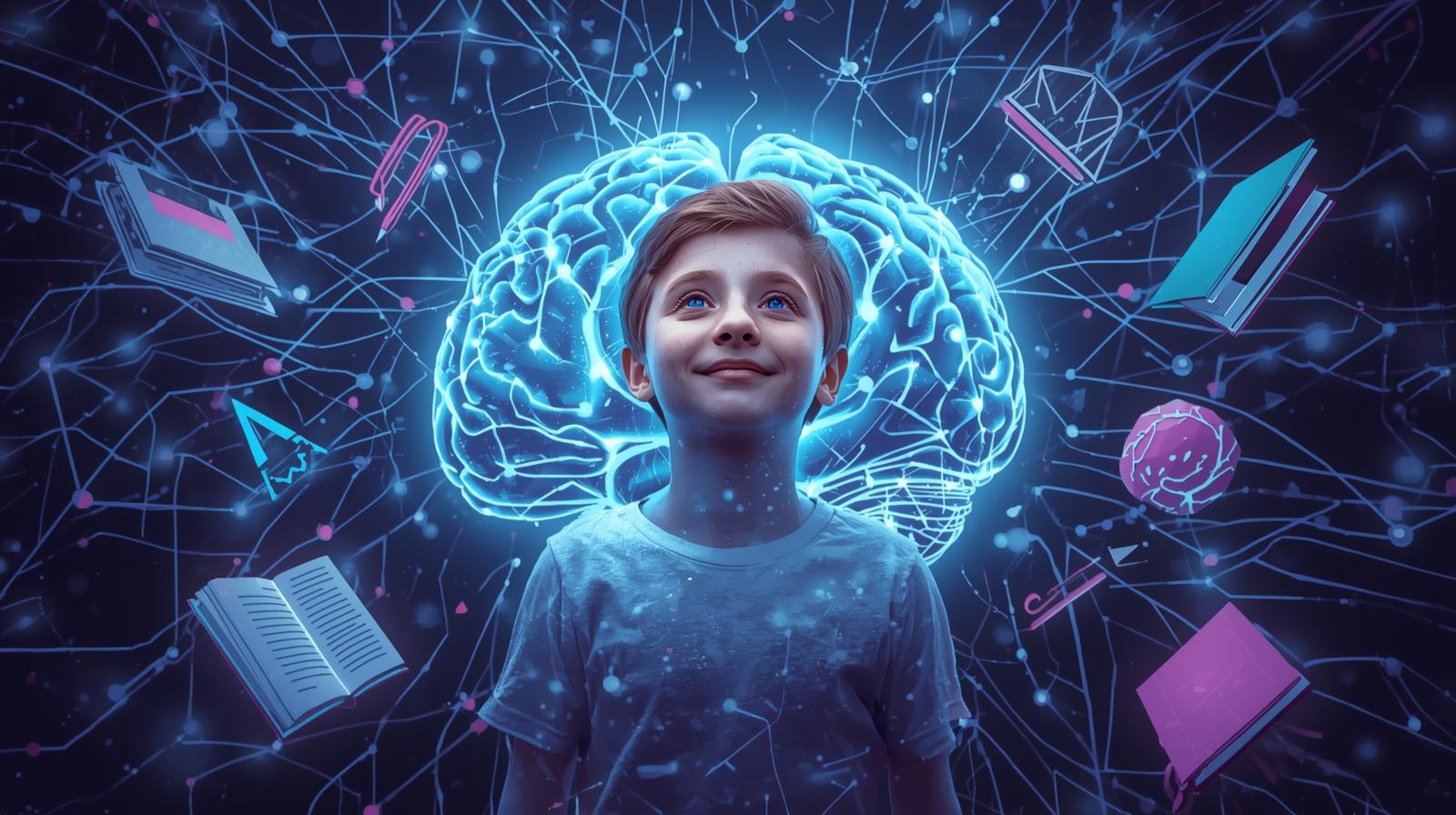
You open your laptop to start a homework assignment. Instead of wrestling with the problem yourself, you paste it into an AI tool. Within seconds, you have a solution. You read it, nod, copy it down, and move on.
It feels efficient. It feels like progress.
But here’s the uncomfortable truth: something is quietly being stolen from you.
Large-scale studies are now revealing what many educators have long suspected—that when students use AI to bypass the hard parts of learning, they’re not saving time. They’re sacrificing understanding.
This isn’t about banning AI. It’s about understanding what you lose when you let it think for you—and how to use it without losing yourself.
🧠 Part 1: The Data Behind the Decline
A 2026 study by Rismanchian and colleagues analyzed over 3.2 million learning interactions across a decade, comparing how students engaged with math problems before and after ChatGPT’s release. The researchers compared two types of problems: those easily outsourced to AI (text-based word problems) and those that required hands-on work (interactive graphing problems).
The results were striking. After ChatGPT’s arrival, students began spending significantly less time on AI-susceptible problems while continuing to invest effort in problems that couldn’t be outsourced. Under proctored conditions—where students couldn’t use AI—this decline vanished entirely.
The study’s authors interpret this as evidence of what they call “cognitive surrender” —students delegating their thinking to AI rather than engaging with the material themselves. The same pattern appeared in learning outcomes: students performed worse on unsupervised practice problems when tested later under supervision. They were finishing more work but learning less.
⚠️ Part 2: The “Effortless Trap”
There’s a name for what’s happening: the illusion of learning.
A 2025 study published in the journal Acta Psychologica examined how AI dependence affects critical thinking among university students. The researchers found that greater reliance on AI was associated with lower levels of critical thinking, with cognitive fatigue partially mediating this relationship. In other words, when students outsource their thinking to AI, they not only weaken their analytical skills—they also become mentally exhausted in ways that make it harder to think deeply.
Students who frequently rely on generative AI tend to demonstrate lower engagement in deep learning and are less likely to apply critical analysis, especially in unfamiliar or ill-structured tasks. Over-reliance on AI results in negative cognitive offloading, which hinders the development of problem-solving skills and critical thinking.
The study also found that information literacy—the ability to evaluate and use information effectively—can buffer the negative impact of AI dependence on critical thinking. In other words, students who understand how to use AI critically are less likely to be harmed by it.

📉 Part 3: The Broader Picture
This isn’t happening in isolation. The trend toward cognitive shortcuts is reshaping how students approach learning across the board.
A 2026 study published in Current Psychology identified six key dimensions of learning difficulties in AI-enhanced educational environments, including overreliance on AI for thinking, superficial understanding, reduced verification of AI-generated information, weaker memory for learned material, diminished cognitive effort, and reduced critical evaluation.
These patterns reflect a broader erosion of independent cognitive engagement. Students are learning to rely on AI not as a tool, but as a substitute for their own thinking.
🛠️ Part 4: How to Use AI Without Losing Yourself
The solution isn’t to avoid AI. It’s to use it intentionally—as a tool for learning, not a replacement for thinking.
Here’s the principle that matters: struggle first, then check.
Before you use AI: Try the problem yourself. Wrestle with it. Make mistakes. Write down what you know and what confuses you. This is where learning happens.
When you use AI: Don’t ask for the answer. Ask for the next step. Ask to see the reasoning. Ask for an explanation of a concept you’re confused about. Use it as a tutor, not a shortcut.
After you use AI: Close it. Explain the solution to yourself out loud. Try a similar problem without help. If you can’t, you haven’t really learned it yet.
How StudyWizardry Supports the Right Kind of AI Use
StudyWizardry is designed to help you use AI the right way—as a scaffold for learning, not a substitute for thinking.
Homework Solver: Provides step-by-step explanations, not just answers. You see the reasoning, so you can learn how to solve problems on your own.
Smart Flashcards: Force active recall, so you’re retrieving information from memory, not just recognizing it.
Quiz Generator: Creates practice tests from your notes, helping you identify gaps before exams.
AI Note Maker: Turns messy lectures into structured notes, so you can focus on understanding rather than transcribing.
Voice AI: Lets you explain concepts out loud, catching gaps that silent reading hides.
The app doesn’t do your thinking. It supports it.
🎯 The Honest Truth
The data is clear: AI is changing how students learn—and not always for the better.
Learning time is down. Critical thinking is eroding. The illusion of learning is replacing genuine understanding.
But this doesn’t have to be your story.
The students who will succeed in the AI era aren’t the ones who avoid technology. They’re the ones who use it intentionally—to support their learning, not replace it. They struggle first, then check. They treat AI as a tutor, not a shortcut.
Your next study session, try this: Before you reach for AI, spend five minutes wrestling with the problem yourself. Write down what you know. Identify where you’re stuck. Then use AI to get unstuck—not to skip the work.
The cognitive surrender is real. But you don’t have to be part of it.
📚
More from StudyWizardry
The cognitive surrender is real—but it’s not inevitable. Explore these guides to learn how to use AI intentionally and build skills that last.
Why students are worried about AI’s impact on their thinking—and how to use it intentionally.
Why the best learning feels hard—and how to struggle productively.
Practical tools that help you learn faster and retain more—without shortcutting the struggle.
✨ Three guides, one principle: Use AI to support your learning—never to replace it. Read them in any order to build skills that last.