Brain Rot Isn’t a Joke. It’s the Symptom of a Generation That Was Never Taught to Focus.
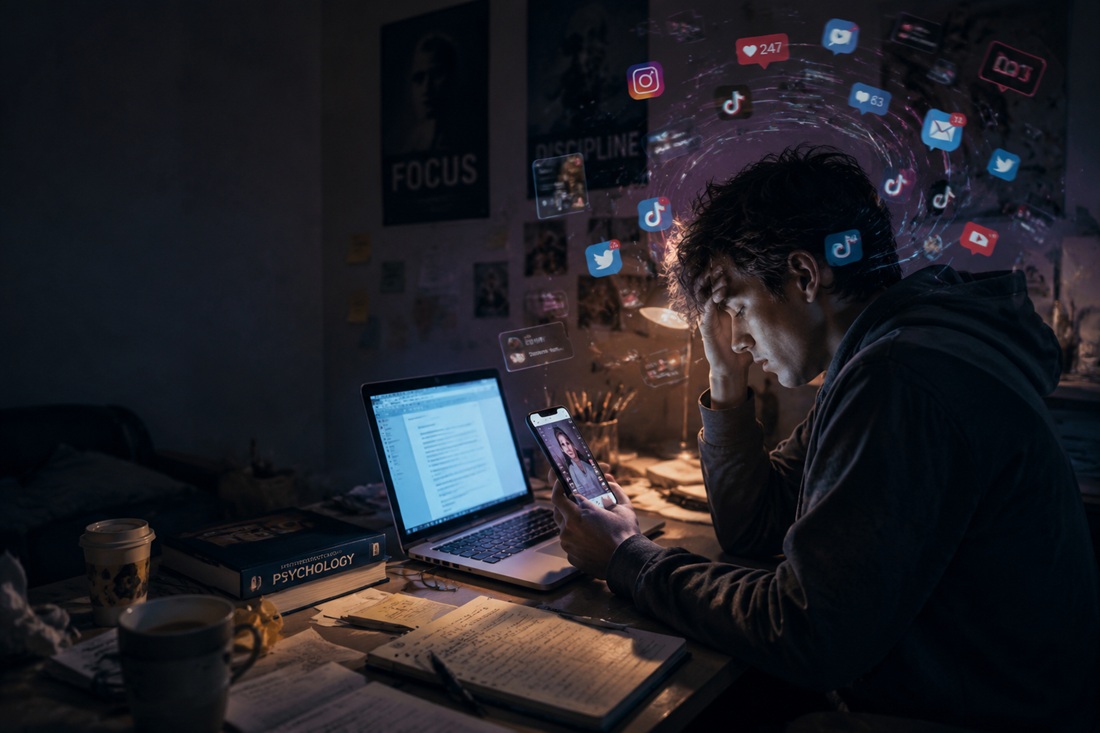
You open your laptop to start an assignment. Two hours later, you’ve watched seventeen unrelated videos about beekeeping, read three celebrity breakup threads, and added twelve items to a shopping cart you’ll never buy. Your textbook is still closed.
You laugh about it. You call it “brain rot.” You send memes to your friends about your fried attention span. But underneath the jokes, there’s a quiet panic: Why can’t I just focus like I used to?
Here’s the truth: your attention span isn’t broken. It’s been trained.
And the viral trend taking over university campuses right now—”lobotomy-core” study sessions—proves that you’re not alone.
📱 Part 1: The Rise of “Lobotomy-Core” Study Sessions
If you haven’t heard of it yet, you will. Across university campuses worldwide, a distinctive trend has emerged that blends internet meme culture with academic routines.
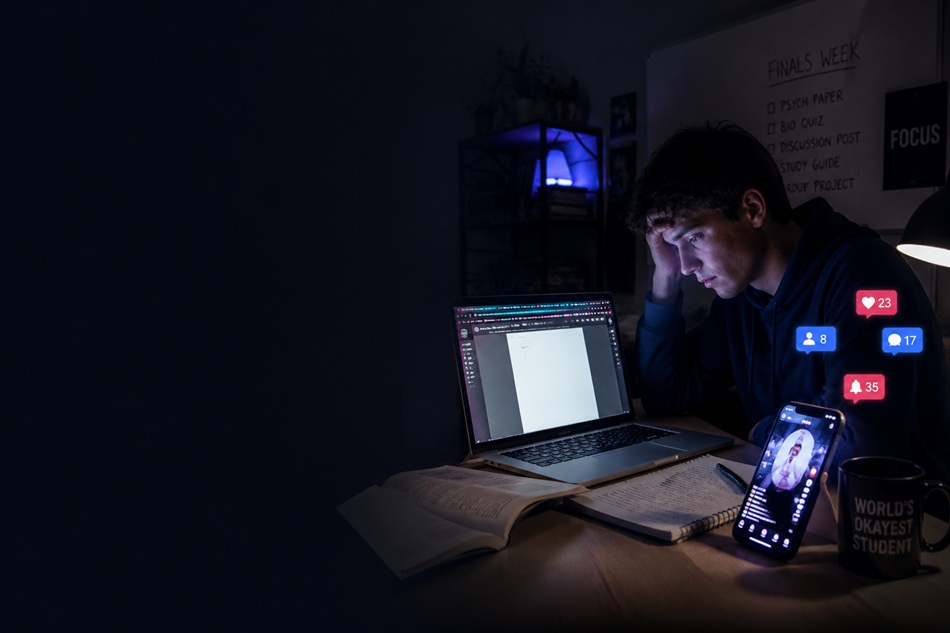
Here’s what it looks like: students gather in darkened rooms, stay largely silent, scroll through short-form video platforms like TikTok, and listen to ambient sounds of industrial machinery instead of the familiar lo-fi beats that once defined focused study environments. They call it “lobotomy-core”—a name that deliberately evokes a sense of numbness and ironic emptiness, satirizing the modern experience of being mentally overwhelmed.
It’s a joke. But it’s also a confession.
Students describe these sessions as a way to unwind while ostensibly preparing for exams or completing readings—though the activity often prioritizes passive consumption over active learning. The trend builds on earlier memes around “brain rot,” a colloquial term for the cognitive effects of prolonged exposure to rapid, low-effort media.
In other words: students are so burned out that they’ve turned their inability to focus into a shared, ironic coping mechanism.
🧠 Part 2: The Science Behind Your Shrinking Attention Span
Your attention span has been trained, over years of constant scrolling, to crave novelty like a toddler on sugar. Every ping, notification, and algorithm-driven video trains your brain to seek dopamine hits—short, frequent rewards that feel good in the moment but leave you unable to sustain focus on anything that requires effort.
Meanwhile, your academic life demands the opposite: monotony, patience, and sustained concentration. It’s like trying to train for a marathon while living in a trampoline park.
The result is a generation that is both the most ambitious and the most distracted. You crave good grades, internships, and a résumé that stands out. But you also crave serotonin shortcuts: endless scrolling, group chats, and algorithmic rabbit holes.
And the guilt spiral that follows? That’s the worst part. You close your phone at 1 AM, having spent four hours consuming content you don’t remember, and you think: Why can’t I just focus like normal people?
But here’s the thing: the environment you’re studying in wasn’t designed for focus. It was designed for engagement—and those are two very different things.
🛠️ Part 3: What Actually Helps
You can’t opt out of the digital world. But you can change how you interact with it.
The students who succeed aren’t the ones with superhuman willpower. They’re the ones who have built systems that make focus easier—and scrolling harder.
Here’s what that looks like in practice:
Separate consumption from creation. Watching a video about a study technique is not the same as using it. Passive consumption feels productive. It isn’t. The real work happens when you close the app and actually engage with the material.
Protect your attention like the finite resource it is. That means putting your phone in another room when you need to focus. It means turning off notifications. It means being intentional about when and how you consume content.
Give yourself permission to rest—actually rest. Scrolling is not rest. It’s passive consumption that still demands cognitive energy. Real rest means stepping away from screens entirely, even if only for a few minutes.
Use technology that works for you, not against you. Tools like StudyWizardry are designed to turn your phone from a distraction machine into a focused study tool. Smart flashcards with spaced repetition, quiz generators that force active recall, and planners that break down your workload into manageable chunks—these aren’t gimmicks. They’re practical ways to study with your attention span, not against it.
📊 Part 4: Focus vs. Distraction—A Quick Comparison
Here’s the difference between studying that actually works and studying that just feels productive—side by side.
| Focused Study | Distracted “Study” |
|---|---|
| Active engagement with material | Passive scrolling through content |
| Testing yourself | Watching others study |
| One task at a time | Constant task-switching |
| Real breaks away from screens | “Breaks” that are just more scrolling |
| Feels hard in the moment | Feels easy but leaves you empty |
The difference is subtle but massive. One builds real understanding. The other builds the illusion of productivity.
🗓️ Part 5: Your Focus Reboot
One week. One small change each day. No perfection required.
Monday: The Wake-Up Call
Open your screen time report. Don’t judge. Just look. You can’t fix what you don’t measure.
Tuesday: The Phone Eviction
When you study, your phone leaves the room. Not face-down. Not on silent. Gone. Watch what happens.
Wednesday: The 25-Minute Dare
Set a timer. Study one thing for 25 minutes. When it rings, step away from screens. Breathe. Move. Repeat.
Thursday: The Brutal Test
Close your notes. Write down everything you remember. The gaps aren’t failures—they’re your roadmap.
Friday: The 2-Minute Review
Ask yourself: what worked? What didn’t? What will I do differently? This is how you get better.
Weekend: The Real Reset
One hour without screens. Walk. Read. Sit in silence. Your brain needs recovery, not more scrolling.
Pick one day. Start there. The rest can wait.
🎯 The Honest Truth
“Lobotomy-core” study sessions are funny because they’re true. But they’re also a sign that something has gone wrong.
You’re not lazy. You’re not broken. You’re just trying to focus in an environment that was never designed for focus.
But here’s what “brain rot” really reveals: this is not inevitable. The students who succeed aren’t the ones who never get distracted. They’re the ones who have systems in place to recover when they do. They treat focus like a skill—one that requires practice, patience, and the right tools.
The generation raised on infinite scroll is also the generation best equipped to understand how attention works. You know the enemy. Now you can build the defense.
Your next study session, try this: Put your phone in another room. Set a timer for 25 minutes. Work on one thing—just one. When the timer goes off, take a real break. Walk away from screens. Stretch. Breathe. Then do it again.
It won’t fix everything overnight. But it will remind you that you’re still in control.
📚
More from StudyWizardry
📄 Stop Trying to Focus. Start Designing for It.
A 5‑layer system that makes distraction difficult and focus inevitable.
📄 Why Studying Feels Impossible with Adult ADHD
Let AI break down overwhelming tasks and make studying easier.
📄 Why Your Brain Freezes on Hard Problems
A neuroscience‑backed strategy for breaking through mental paralysis.
✨ “Brain rot” isn’t a joke—it’s a signal. Let StudyWizardry help you study with intention, not distraction.
It's a viral study trend where students gather in dark rooms, scroll through TikTok, and listen to industrial noise instead of studying. The name is ironic—students are joking about feeling mentally numb and overwhelmed. It's a cultural symptom, not a real study method.
No. It's a colloquial term for the cognitive fatigue and reduced attention span that comes from prolonged exposure to rapid, low-effort digital content. It's not a diagnosis—it's a description of a very real experience.
If you genuinely want to study but can't seem to start or sustain focus, that's an attention challenge, not laziness. Laziness is a lack of desire. Struggling to focus despite wanting to is a sign that your environment or habits are working against you.
Yes. Attention is like a muscle—it can be trained. But it takes practice, patience, and intentional changes to your environment. Start small: put your phone in another room, set a timer, and work for 25 minutes on one thing. Repeat.