The Scribble Study Method: What It Is, and When It Actually Works
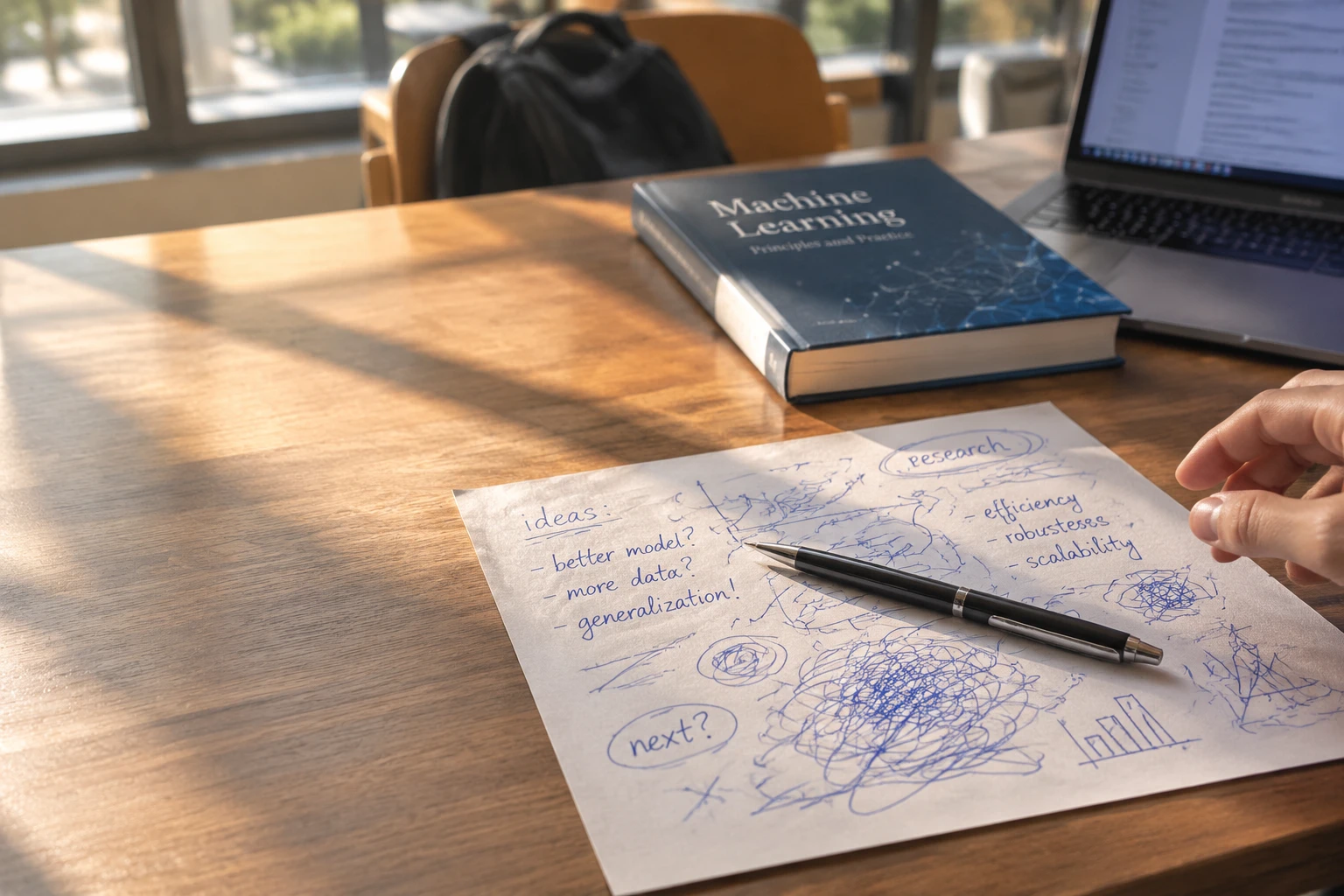
You’ve seen the TikToks. Someone sits down with a textbook, a pen, and a blank sheet of paper—then proceeds to scribble aimlessly for the entire study session. The caption claims it “boosts memory by 29%” or “hacks your focus.”
It looks strange. It also looks strangely compelling.
The Scribble Study Method has racked up hundreds of millions of views, and for good reason: it promises something every student wants—a way to stay focused without white-knuckling your attention for hours. But like most viral study hacks, the reality is more nuanced than the fifteen-second version suggests.
Here’s the honest breakdown: what the method actually is, what the research says, and how to use it without wasting your time.
First, a Clarification: “Scribble” Means Two Different Things
This is the part most viral videos skip, and it’s the reason the advice feels confusing.
The term “Scribble Study Method” is used to describe two completely different techniques. They look similar on camera—a hand moving across paper—but they do different things for your brain.
Method 1: The Focus Scribble (Doodling While You Study)
You keep your hand moving with random, meaningless marks—circles, squiggles, shaded shapes—while you listen to a lecture or read. The scribbles are not notes. They are a low-effort secondary task meant to keep your brain from drifting.
Method 2: The Recall Scribble (Blurting After You Study)
You study the material, close the book, and scribble down everything you remember as fast as you can. The scribbles are the point—they are a form of free recall, meant to expose what you know and what you don’t.
These are not the same. One is a focus tool. The other is a memory test. And the evidence for each is very different.
Method 1: The Focus Scribble—Does Doodling Help You Concentrate?
The idea behind the Focus Scribble is simple: when a task is boring or passive, your brain looks for something else to do. It drifts to your phone, your to-do list, your next meal. Scribbling gives your hand just enough to do that your attention stays anchored to the material.
It’s a compelling theory. And it has some science behind it—but also some important limits.
What the Research Says
The most famous study on this comes from psychologist Jackie Andrade at the University of Plymouth in 2009. Participants listened to a deliberately boring two-and-a-half-minute phone message. Half of them shaded in shapes on a piece of paper while listening; the other half just listened. The doodlers recalled 29% more information—an average of 7.5 items versus 5.8.
Andrade’s explanation was that doodling prevented daydreaming. By giving the brain a small, low-effort task, it kept attention from wandering off entirely.
That’s the result every TikTok video cites. But there’s a newer study that rarely makes the cut.
In 2024, researchers Spencer-Mueller and Fenske at the University of Guelph ran two experiments with 222 participants using actual lecture content—not a short phone message. Their finding was blunt: doodling did not reduce boredom or mind-wandering, and it did not improve attention or retention. Plain note-taking outperformed doodling on every measure.
So Which Is It?
Both are true—for different situations.
The 2009 study used a very boring, passive task where the main threat was daydreaming. The 2024 study used lecture content that required more cognitive engagement. The honest takeaway is this:
The Focus Scribble may help when the material is passive and the main problem is drifting—a slow lecture, a long recording, a dense reading you’re trying to get through. It is less likely to help when the material requires deep processing and active thinking. And if you’re going to do something with your hands, actually taking notes is usually the stronger choice.
There’s also a popular variant: scribbling with your non-dominant hand. The idea is that the extra coordination occupies more mental bandwidth, keeping you even more locked in. There is no formal research on this specific version, though the logic is consistent with what we know about low-demand secondary tasks. It’s worth trying—but treat it as an experiment, not a guarantee.

Method 2: The Recall Scribble—The Part With Strong Evidence
Here’s where the science gets much more solid.
The Recall Scribble is essentially free recall—one of the most robust findings in cognitive psychology. You study the material, close the source, and write down everything you can remember without cues. Then you check what you missed.
This is the same core mechanism behind blurting, and the evidence for it is extensive. Retrieval practice—actively pulling information from memory—produces stronger, more durable learning than rereading or reviewing. The act of trying to produce an answer strengthens the memory, even when you get it wrong.
The Recall Scribble is not a focus hack. It’s a diagnostic tool. It shows you exactly where your understanding breaks down, so you know what to study next.
The key difference from the Focus Scribble: with the Focus Scribble, you keep your hands moving so your brain can absorb. With the Recall Scribble, you move your hands after you’ve absorbed, to find out what stuck.
How to Use Each Method (Without Wasting Your Time)
Here’s a practical protocol for each, so you can test them yourself.
The Focus Scribble: A 3-Step Test
-
Choose the right task. Use this during passive learning only—a recorded lecture, a long reading, a slow seminar. Not during problem sets or active revision.
-
Keep it mindless. The scribble must require almost no concentration. Loops, dots, shaded boxes, simple shapes. If your scribble needs thinking, it’s too complicated and will steal attention rather than anchor it.
-
Check the result. After the session, try to recall three key points. If you can, the scribble may be helping. If you can’t, it isn’t—and you should switch to active note-taking.
The honest expectation: For some students—particularly those who struggle with attention during boring tasks—this can be a useful tool. For others, it’s just a way to make studying feel less painful without improving the outcome. Test it on yourself, and trust your data.
The Recall Scribble: A 4-Step Protocol
-
Study the material once. Read the chapter, attend the lecture, review your notes.
-
Close everything. Put the book away, close the tabs, turn the notes face down.
-
Scribble for five minutes. Write down everything you remember—facts, concepts, structures, examples. Don’t organize. Don’t worry about neatness. Just produce.
-
Open your materials and compare. Mark what you missed, what you got wrong, and what you couldn’t explain. That marked list is your study plan.
The honest expectation: This will feel harder than rereading. That’s the point. The effort of retrieval is what strengthens memory. And the gaps you find are more valuable than a page of neat notes.

Where StudyWizardry Fits In
Both scribble methods produce something useful—if you know what to do with it.
The Focus Scribble is a low-tech tool. You don’t need an app. But if you’re already studying on a device, keeping the workflow simple matters. StudyWizardry works in your browser, so you can have your lecture or reading open while you work, without switching between apps.
The Recall Scribble is where tools can make a real difference. After you’ve scribbled down what you remember, you have a list of gaps. The Quiz Generator can turn those gaps into practice questions from your own notes and slides—so you can test yourself on exactly what you missed. Flashcards can lock in the facts and definitions that didn’t come back. And the AI Note Maker can help you organize the material you’re still learning, so the next Recall Scribble starts from a stronger foundation.
The principle is consistent: the scribbling is yours. The tools handle the logistics around it.
The Honest Truth
The Scribble Study Method is not a magic trick. It’s two different techniques that got bundled together by a viral trend.
The Focus Scribble has some evidence behind it for passive, boring tasks—but newer, better-controlled research suggests it’s not the memory booster it’s often claimed to be. It might help you stay in the room. It won’t do the learning for you.
The Recall Scribble is backed by decades of research on retrieval practice. It’s harder, it’s less glamorous, and it works.
So here’s the practical version: if you’re drifting during a slow lecture, try a mindless scribble. If you want to know what you actually know, close the book and scribble down everything you remember. One helps you pay attention. The other helps you learn.
Your next study session, try this: After you finish a chapter, close the book and scribble down what you remember for five minutes. Then check. The gaps you find are not failures. They are the most useful information you have.
📚
More from StudyWizardry
The scribble method is one tool. These guides explore the retrieval techniques that make it work—and when to use them.
📄 Stop Highlighting. Start Blurting. (A Cognitive Science Approach to Reliable Recall)
The complete six-phase protocol for using free recall to expose gaps and build durable memory.
📄 Your Brain’s Delete Button—And How Active Recall Disables It!
Why retrieval practice is the foundation of durable learning.
📄 The Pretesting Effect: Why Getting Answers Wrong Before You Study Can Help You Learn Better
The counterintuitive strategy that prepares your brain to learn.
✨ Three guides, one system: Learn to blurting, understand active recall, and prepare your brain with pretesting—then test the scribble method for yourself.
📚 References
-
Andrade, J. (2009). What does doodling do? Applied Cognitive Psychology, 24(1), 100–106. https://onlinelibrary.wiley.com/doi/abs/10.1002/acp.1561
-
Spencer-Mueller, E. K., & Fenske, M. (2024). Note-taking for the win: Doodling does not reduce boredom or mind-wandering, nor enhance attention or retention of lecture material. Quarterly Journal of Experimental Psychology. https://pmc.ncbi.nlm.nih.gov/articles/PMC11295400/
-
Wammes, J. D., Meade, M. E., & Fernandes, M. A. (2016). The drawing effect: Evidence for reliable and robust memory benefits in free recall. Quarterly Journal of Experimental Psychology, 69(9), 1752–1776. https://doi.org/10.1080/17470218.2015.1094494
-
Scribble and Learn—A Learner Centric Approach. (2026). IEEE Frontiers in Education Conference (FIE). https://ieeexplore.ieee.org/document/11328557
It's a viral term that describes two different techniques. The first is doodling or scribbling with your hand while you listen or read—a focus tool meant to stop your mind from wandering. The second is closing the book and scribbling down everything you remember—a form of free recall meant to test your memory.
It depends which version you mean. The Focus Scribble (doodling) has mixed evidence: one classic study found a 29% recall boost during a boring task, but a larger 2024 study found no benefit compared to note-taking. The Recall Scribble (free recall) is backed by strong evidence—retrieval practice is one of the most reliable findings in learning science.
For the Focus Scribble, the whole session—as long as you're listening or reading. For the Recall Scribble, five to ten minutes is usually enough to exhaust what you remember and reveal your gaps.
There's no formal research showing that the non-dominant hand version is more effective. Some students say it helps because the extra coordination occupies more attention. Try it and see—but don't expect it to be a game-changer.
The Quiz Generator turns your notes and slides into practice questions, so you can test yourself on the gaps you find after a Recall Scribble. Flashcards use spaced repetition to lock in what you missed. And AI Note Maker helps you organize the material you're still learning.
Many ADHD students find that a low-effort physical task like doodling helps them stay anchored during passive learning. But responses vary widely—some find it distracting rather than helpful. It's worth testing on yourself, ideally during a lecture you can review afterward to check how much you retained.