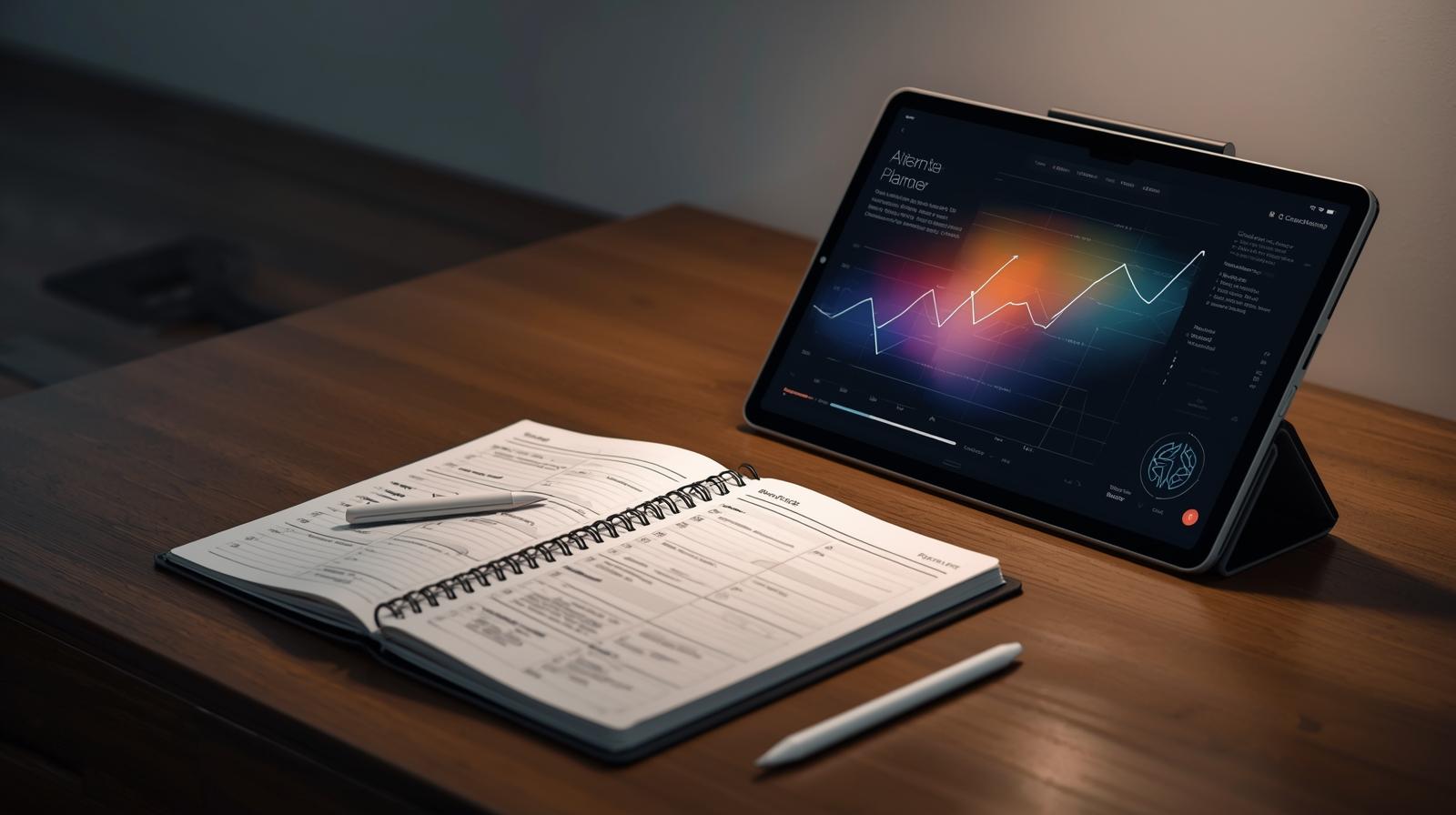
Stop Trying to Focus. Start Designing for It.
You know the ritual. It’s 11 PM. You’ve spent four hours with your textbook open, but only 47 minutes of that was actual studying. The rest was a blur of TikTok, Instagram, “researching the perfect playlist,” and staring blankly at the wall while telling yourself you’ll start “in just five more minutes.”
Tomorrow, you swear, will be different. Tomorrow, you’ll wake up focused. You’ll close every tab. You’ll finally use that website blocker you downloaded three months ago.
Tomorrow never comes.
Here’s the uncomfortable truth we don’t talk about enough: willpower is not a solution—it’s a gamble. Every time you rely on self-control to resist distraction, you’re betting against teams of engineers who spend millions perfecting the art of keeping you hooked. And in 2026, with AI-powered algorithms getting smarter by the day, you’re going to lose that bet more often than you win.
But the students who consistently get things done aren’t the ones with superhuman discipline. They’re the ones who’ve stopped fighting their biology and started building environments where focus happens automatically.
This isn’t another “how to focus” article. It’s a complete rethink of what focus even means—and a practical blueprint for designing a life where distraction is no longer your default.
📱 Why “Try Harder” Is a Trap
We’ve been sold a lie. Productivity culture tells us that distraction is a moral failing. If you’re not focused, you’re lazy. If you procrastinate, you lack character. The solution? Try harder. Download another app. Buy another planner. Just focus.
This narrative is incredibly convenient for the tech companies engineering your attention. It places the blame entirely on you, not on the billion-dollar machines designed to capture every spare moment of your mental bandwidth.
The reality: You’re not fighting weakness. You’re fighting:
-
AI-powered algorithms trained on millions of hours of human behavior to maximize the time you spend scrolling
-
Variable reward schedules—the same psychological mechanism that makes slot machines addictive
-
Social validation loops engineered into every platform to trigger dopamine with every notification
-
FOMO (Fear of Missing Out) that’s been weaponized by every app on your phone
According to recent data, screen time has skyrocketed across every demographic. People are finally waking up to how addictive our devices really are. The irony? Many are turning to “dumb phones” or radical digital detoxes to escape.
But you don’t need to abandon your smartphone. You need a different relationship with it. You need to stop trying to “focus harder” and start designing an environment where focus is the natural outcome.
📚 The foundation matters: This paradox—using technology to escape technology—is the central challenge of modern student life. Our guide “The Paradox of 2026: Using AI to Escape AI“ explores this tension in depth.
🧠 You’re Not Lazy. You’re Outmatched.
Let’s look at what actually happens when you sit down to study.
On one side of the ring: your prefrontal cortex—the rational part of your brain responsible for focus, planning, and self-control. It’s energy-intensive, easily fatigued, and evolved in a world without Instagram, TikTok, or even electricity.
On the other side: every app on your phone, designed by teams of neuroscientists and behavioral psychologists who understand exactly how to exploit every vulnerability in your cognitive architecture.
This isn’t a fair match. You’re bringing a butter knife to a drone strike.
A 2026 industry report found that 97% of marketers now consider AI essential for their work—and they’re using it to create content that hooks you faster and more effectively than ever before. The very tools that could help you learn are also the tools competing for your attention.
The breakthrough: Once you understand this, the question shifts from “How do I focus harder?” to “How do I redesign my environment so focus happens automatically?”
You stop blaming yourself and start building systems. You stop fighting your biology and start working with it.
⏱️ Master the micro: The Pomodoro Technique is scientifically proven to reduce the “activation energy” required to start. Our complete guide “The Pomodoro Hack: Engineering Your Brain’s ‘Flow State’ On Demand“ explains why 25-minute sprints bypass your brain’s resistance.
🏗️ 5 Design Layers That Require Zero Willpower
Here’s what actually works in 2026. It’s not complicated. It’s not trendy. It’s a set of environmental design principles that make distraction difficult and focus inevitable.
Layer 1: The 5-Minute Lie (That Works)
The hardest part of any task isn’t the work—it’s the starting. Procrastination isn’t laziness; it’s your brain’s attempt to protect you from discomfort. Uncertainty feels physically threatening, so your brain seeks certainty elsewhere: checking email, organizing notes, watching “just one more” video.
The redesign: Commit to five minutes. That’s it. Set a timer for five minutes of focused work with explicit permission to quit after. What you’ll discover is that starting is the only hard part. Once you’re in motion, momentum carries you forward.
This works because it bypasses your brain’s threat response. Five minutes feels survivable. Four hours doesn’t.
Layer 2: Out of Sight, Out of Mind
This sounds too simple to be effective. It’s not. It’s the most powerful focus strategy in existence.
The redesign: When you need to focus, your phone leaves the room. Not face-down. Not on silent. Not in your bag. Another room. Physically, completely out of reach.
Research consistently shows that the mere presence of your phone—even face-down, even turned off—reduces cognitive capacity. Your brain allocates resources to resisting the temptation. Moving it out of physical proximity eliminates the battle entirely.
In 2026, with AI-powered notifications getting smarter and more persistent, this isn’t optional. It’s survival.

Layer 3: Empty Your Head First
Anxiety and distraction often come from swirling, unstructured thoughts occupying your mental bandwidth. That assignment you forgot. That email you need to send. That thing your friend said that’s still bothering you.
The redesign: Before every study session, spend two minutes writing down everything in your head. Every task, every worry, every random thought. Get it on paper or in your AI Note Maker. Externalizing these thoughts reduces their power and frees up working memory for focused work.
This practice, sometimes called “mental decluttering,” is supported by cognitive science. Your working memory has limited capacity. Every unresolved thought occupying that space is less brainpower available for learning.
Layer 4: Guilt-Free Scrolling (The Dopamine Compromise)
Here’s the truth no productivity guru tells you: you will check your phone. Resisting entirely is unsustainable. The solution isn’t abstinence—it’s scheduled indulgence.
The redesign: Build deliberate distraction breaks into your study block. After 25 minutes of focused work, take five minutes to consciously check everything. Scroll Instagram. Reply to messages. Watch a short video. Then, when the five minutes end, your phone goes back in the other room.
This works because it acknowledges your brain’s need for dopamine while keeping it contained. You’re not fighting your biology; you’re designing a system that works with it.
Layer 5: Do ONE Thing (Then Stop)
Multitasking is a myth. What feels like multitasking is actually rapid task-switching, which costs you up to 40% of your productive time. Every switch requires your brain to reorient, reload context, and re-engage—a cognitive tax that adds up fast.
The redesign: For each focus block, identify exactly one thing you’ll accomplish. Not three things. Not “work on the paper.” One specific, completable task. “Write the introduction.” “Solve problems 5-10.” “Create flashcards for Chapter 3.”
When that one thing is done, the block is a success. You can stop with zero guilt, or choose the next “one thing” and continue. The key is that you’re measuring completion, not time.
🧠 Take it deeper: The most effective active recall happens when you turn your notes into targeted practice. Our guide “Your Brain’s UI: Designing Flashcards for Your Unique Cognitive Operating System“ shows you how to build review tools that actually stick.
📊 Your Perfect Focus Block (Cheat Sheet)
Here’s how these five layers come together in a real 60-minute focus block:
| Time | Action | Design Principle |
|---|---|---|
| 0:00 – 0:02 | Brain dump everything in your head into a notebook or app | Clear working memory (Layer 3) |
| 0:02 – 0:05 | Move phone to another room. Set up workspace. Choose ONE task. | Eliminate friction (Layers 2 & 5) |
| 0:05 – 0:10 | Commit to five minutes of that one task | Bypass starting resistance (Layer 1) |
| 0:10 – 0:35 | Continue working until natural break | Momentum carries you |
| 0:35 – 0:40 | Guilt-free scrolling. Check everything. | Scheduled dopamine (Layer 4) |
| 0:40 – | Repeat cycle or stop—you’ve already won | Sustainable productivity |
This isn’t a rigid prescription. It’s a template you can adapt to your own rhythms, energy levels, and course load. The key is consistency, not perfection. Even implementing 70% of this will dramatically shift how you interact with technology and information.
🎯 The Secret Nobody Tells You
I’ve spent years studying productivity, experimenting with every method, testing every app, trying every “life-changing” system. Here’s what I’ve learned:
The students who consistently perform well aren’t the ones with superhuman focus. They’re the ones who stopped pretending they have it.
They stopped blaming themselves and started designing environments. They stopped fighting their biology and started working with it. They stopped relying on willpower and started building systems.
In 2026, with AI saturating every corner of our digital lives and attention becoming the most valuable resource on the planet, this isn’t just nice advice. It’s the difference between thriving and barely surviving.
The student who masters environmental design doesn’t just get better grades. They get something more valuable: proof that they can trust themselves to do what they say they’ll do. And that changes everything.
Start tonight. Pick one layer from this system. Just one. Implement it tomorrow. Not all five. Not a perfect system. One small change.
Your phone is winning because the game is rigged. But you can redesign the board.
📚 Further Reading: Build Your Complete Focus System
Research shows your brain allocates cognitive resources to resisting the temptation of your phone even when it's face-down and silent. The mere presence of the device reduces available working memory. Moving it physically out of the room is the only way to fully reclaim that cognitive capacity.
This is a valid concern. The solution is to designate one device for focus. If your phone is your study tool, consider using a tablet or laptop for focused work and keeping your phone in another room. Or use your phone in airplane mode with only essential apps visible. The key is eliminating the temptation to switch contexts.
Nothing. The five-minute rule isn't magic—it's a starting point. If five minutes feels impossible, start with two minutes. If two minutes feels impossible, examine what you're avoiding. Often, the barrier isn't focus but fear: fear of the task being too hard, too boring, or revealing that you don't know something. Name the fear, and it loses power.
Define what "urgent" actually means—it's almost always less urgent than it feels. Use "Do Not Disturb" modes with exceptions for specific contacts. Communicate your focus schedule to people who need to reach you. The world doesn't end in 25 minutes.