
The Invisible Syllabus: 7 Skills They Don’t Teach in Class (But You Absolutely Need)
You’ve aced the official curriculum. You attend lectures, complete assignments, and study the textbooks. Yet, you still feel unprepared for the real challenges of academic life: the overwhelming information, the forgetting curve, the paralyzing procrastination, and the sheer mental fatigue.
Why? Because success depends on mastering The Invisible Syllabus—the unspoken, rarely-taught meta-skills that transform how you learn, retain, and apply knowledge.
This guide unveils the 7 core competencies of this hidden curriculum and provides a practical, step-by-step action plan to master each one, leveraging both timeless techniques and modern AI-powered tools like StudyWizardry to build your ultimate cognitive toolkit.
The 7 Pillars of the Invisible Syllabus
These seven pillars form the core of a practical, actionable framework. Each represents not just an isolated skill, but a fundamental shift in mindset and approach to the entire learning process. Together, they create an integrated system that transforms you from a passive consumer of information into the active architect and manager of your own education. The following table breaks down each pillar, the specific learning obstacle it dismantles, and the key methods or tools that bring it to life.
| Skill Pillar | The Core Problem It Solves | Your Secret Weapon |
|---|---|---|
| 1. Strategic Forgetting | Information overload & mental clutter | Spaced Repetition Systems & Smart Filtering |
| 2. Energy-Centric Planning | Burnout & inefficient time use | Biological Rhythms & AI Study Planners |
| 3. The Synthesis Mindset | Passive reading & superficial understanding | The Feynman Technique & AI Note Makers |
| 4. Question Engineering | Gaps in understanding & fear of asking | AI Homework Solvers & The “5 Whys” Method |
| 5. Focus Architecture | Digital distraction & shallow work | Digital Hygiene & Concentration Rituals |
| 6. Iterative Revision | Static notes that don’t evolve | Progressive Summarization & Flashcard Systems |
| 7. Metacognitive Tracking | Flying blind without progress insight | Personal Learning Dashboards & Data |
🔍 Pillar 1: Strategic Forgetting
Your brain is not a hard drive. Treating it like one leads to congestion and crash. Strategic forgetting is the art of intentionally filtering out noise to make space for genuine insight.
The Action Plan:
-
Identify Core vs. Context: After a lecture or chapter, force yourself to define the 3-5 core concepts. Everything else is supporting context.
-
Leverage Spaced Repetition: Use Flashcards not for everything, but exclusively for those core concepts, definitions, and formulas. The algorithm schedules reviews just before you’re likely to forget, cementing them permanently.
-
Externalize the Rest: Use the AI Note Maker to summarize entire chapters or lectures into concise, searchable digests. This creates a trusted “second brain” you can query, freeing your biological brain for higher-order thinking.
⚡ Pillar 2: Energy-Centric Planning
Forget time management; manage your energy. Your cognitive capacity fluctuates throughout the day. Planning without recognizing this leads to wasted peak hours on trivial tasks.
The Action Plan:
-
Map Your Mental Energy: For a week, track your focus levels. Are you sharp in the morning? A night owl?
-
Schedule by Cognitive Demand: Use your AI Study Planner to block:
-
Deep Work Zones (High Energy): For complex problem-solving, writing, and new concepts.
-
Maintenance Blocks (Low Energy): For administrative tasks, review flashcards, organizing notes.
-
-
Build in Strategic Renewal: The planner should enforce breaks (like Pomodoro) and diverse activity. True productivity includes recharge.
🧩 Pillar 3: The Synthesis Mindset
Memorization is temporary. Synthesis—connecting new knowledge to what you already know—creates understanding that lasts.
The Action Plan:
-
Apply the Feynman Technique: Choose a concept. Explain it out loud as if to a 10-year-old. Where do you stumble? That’s your knowledge gap.
-
Use AI to Simulate Teaching: Input a concept into the AI Note Maker or Homework Solver and ask: “Explain this to me in simple terms with a real-world analogy.” Study the explanation to see how experts break down complexity.
-
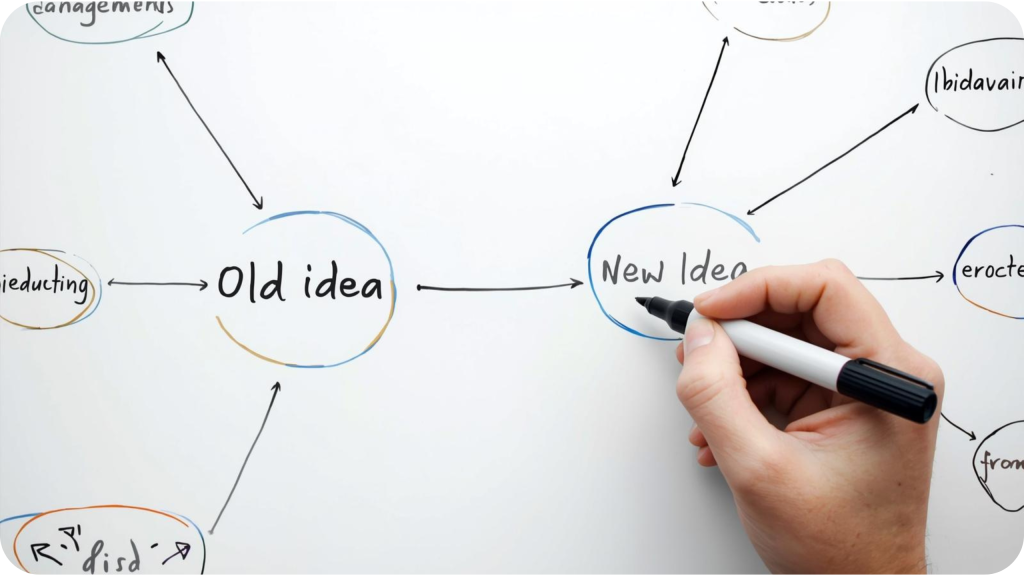
Create Concept Maps: Don’t just take linear notes. After using the PDF Summarizer, manually draw connections between the summarized ideas. This active creation builds neural pathways.
❓ Pillar 4: Question Engineering
The quality of your learning is determined by the quality of your questions. Passive learners absorb answers; active learners engineer questions that uncover deeper layers.
The Action Plan:
-
Adopt the “5 Whys”: For any fact, ask “Why?” five times. “Why does this formula work? Why are these variables related?”
-
Use AI as a Socratic Tutor: Pose your “why” chain to the Advanced Math Solver or Homework Solver. Don’t just get the final answer; request a step-by-step breakdown and fundamental principles behind each step.
-
Generate Your Own Quizzes: Use the Quiz/Test Generator on material you think you know. The process of creating questions forces you to identify what’s truly important and anticipate different angles.
> > Want to see this “Question Engineering” pillar applied to a real, challenging subject? Learn how to transform an AI solver from a simple answer tool into a personal physics tutor in our step-by-step guide: A Physics Student’s Guide to Using an AI Math Solver for Word Problems. It breaks down a proven 4-step framework to decode complex problems, showing you exactly how to ask the right questions to build genuine understanding, not just find answers.
🎯 Pillar 5: Focus Architecture
In the digital age, focus isn’t found—it’s architected. You must design your environment and habits to defend your attention.
The Action Plan:
-
Create a “Focus Ritual”: A consistent 5-minute pre-study routine (e.g., clear desk, put phone in another room, open specific app) signals to your brain it’s time for deep work.
-
Harness Technology Intentionally: Use Study Alarms not as nagging reminders, but as sacred start/stop signals for focused sessions.
-
Batch Digital Consumption: Schedule specific times to check messages or browse. Outside those times, use app blockers. Your study tools should be the only digital tools active during sessions.

📈 Pillar 6: Iterative Revision
Your first note is always wrong. Or rather, incomplete. Iterative revision is the process of refining notes over time, distilling them into purer and more powerful forms.
The Action Plan:
-
The Three-Pass Note System:
-
Pass 1 (Live): Rough, messy notes in class/while reading.
-
Pass 2 (24-Hour Reframe): The next day, use the AI Note Maker to summarize and structure those rough notes. Add questions from Pillar 4.
-
Pass 3 (Weekly Synthesis): At week’s end, review all Pass 2 notes and create a one-page “master summary” of core themes using the Note Maker again.
-
-
Transform Notes into Active Tools: Turn key points from your Pass 3 summaries into Flashcards for active recall, not passive re-reading.
> > Ready to transform your notes into a powerful, active recall system? The final step—creating flashcards—is where true mastery happens. But not all flashcards are created equal. Discover the science-backed frameworks for building “Smart Flashcards” that actually stick, from contextual sentence cards to collocation clusters. Our expert guide, Build Your IELTS Vocabulary with Smart Flashcards: The 2025 Expert Guide, provides a complete strategic blueprint. While focused on IELTS, its principles for leveraging spaced repetition, active recall, and the generation effect apply to mastering any subject, turning your refined notes into unshakable knowledge.
📊 Pillar 7: Metacognitive Tracking
“Am I improving?” Without data, you’re guessing. Metacognition is thinking about your thinking—tracking your strategies and their outcomes to optimize your learning machine.
The Action Plan:
-
Define Your Metrics: What does “success” look like? Fewer study hours for same results? Higher quiz scores? Less stress?
-
Use Your Data: Review Progress Reports from your AI Planner. Are you consistently missing goals for a certain subject? Your plan is unrealistic or your method is ineffective.
-
Embrace Healthy Competition: A Leaderboard isn’t just about beating others. It’s a mirror. Seeing peers’ consistent activity can motivate and provide a benchmark for your own commitment.
Building Your Personalized Invisible Syllabus
Start not with all seven, but with one. Identify your biggest leak—is it focus (Pillar 5), retention (Pillar 1), or understanding (Pillar 3)? Commit to practicing that pillar’s action plan for two weeks. Integrate the recommended StudyWizardry tools not as separate apps, but as interconnected parts of your new learning workflow.
The tools themselves are not the magic; the mindset shift is. By consciously practicing these invisible skills, you move from being a passive consumer of information to the architect of your own expertise. You stop just studying the material and start mastering the far more critical subject: the art of learning itself.
Absolutely not. This is the core paradox of the Invisible Syllabus. Investing time upfront in these meta-skills dramatically reduces your total study time in the long run. It’s like sharpening your axe before chopping wood. Pillars like Strategic Forgetting and Energy-Centric Planning are specifically designed to eliminate wasted effort and increase the ROI of every minute you study.
No. The Invisible Syllabus is universal. High school students can use it to build better foundations. Graduate researchers can use Synthesis and Question Engineering for deeper work. Even professionals pursuing continuous learning or career changes will find these skills essential. The tools adapt to the complexity of your material.
Do a quick audit. What’s your most frequent pain point?
"I forget everything" → Start with Pillar 1 (Strategic Forgetting).
"I can't focus" → Start with Pillar 5 (Focus Architecture).
"I study but don't understand" → Start with Pillar 3 (Synthesis Mindset).
Choose one, master its basic action plan for 2-3 weeks, then layer on the next. Trying to change everything at once is counterproductive.