Digital Detox for the Mind: How to Use AI Study Tools Without Losing Your Focus
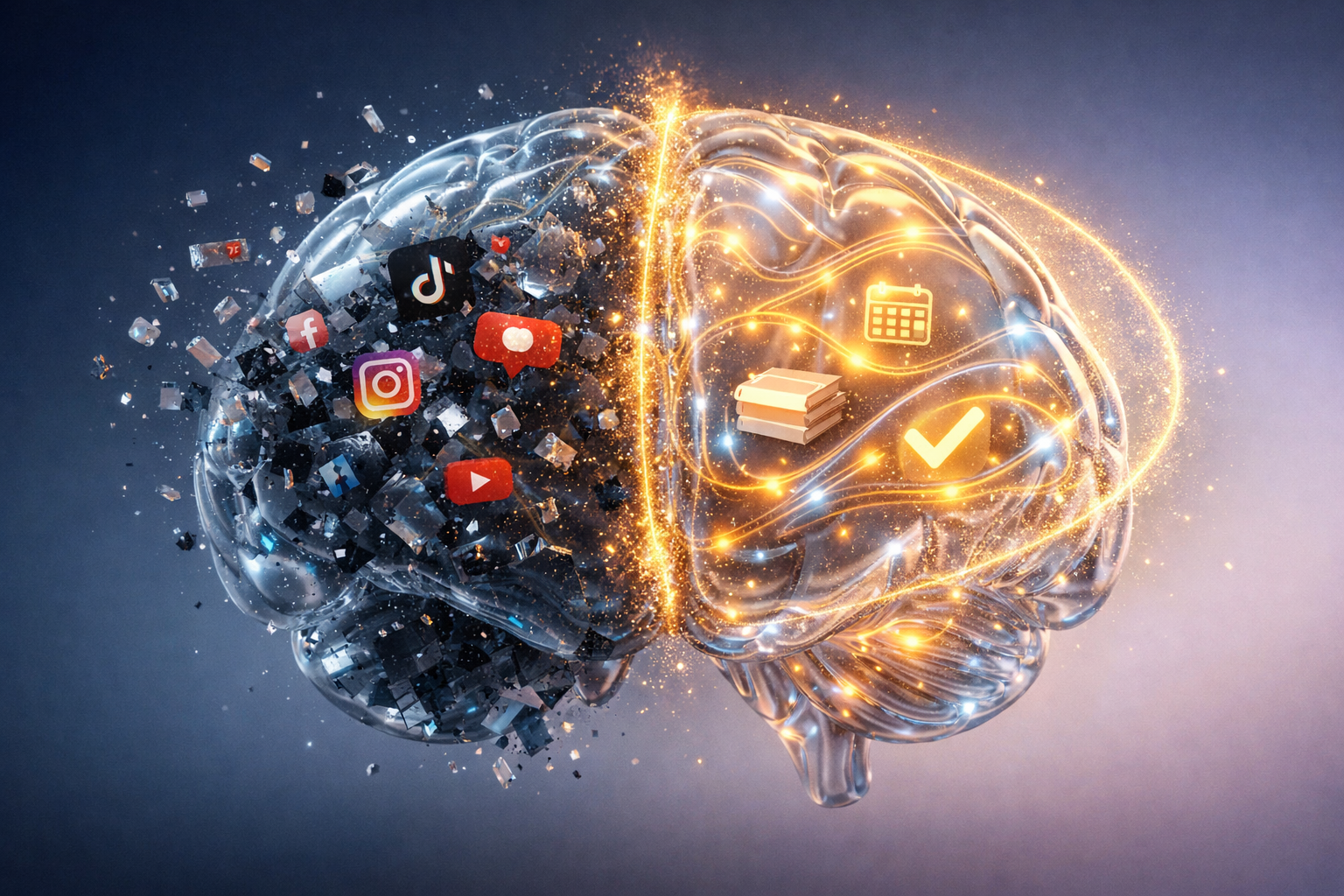
You open your study app to summarize a textbook chapter. Two hours later, you’re on your third YouTube deep-dive, the textbook tab long forgotten. The very tools promising academic salvation are fracturing your focus. This is the modern student’s paradox: leaning on digital tools for help, only to be pulled into digital distraction.
What if the solution isn’t using less technology, but using it smarter? This guide isn’t about deleting apps; it’s about architecting your Personal Digital Immune System—a strategic framework to let AI handle the cognitive clutter, so your brain can do what it does best: think deeply, learn effectively, and enter a state of flow without constant interruption.
🧠 Part 1: The Real Enemy Isn’t Your Phone—It’s Cognitive Switching
We often blame apps for stealing our time, but the deeper damage is invisible. Every time you switch from a textbook to a notification, from a problem set to a message, your brain pays a “Cognitive Switching Tax.”
Neuroscience shows that toggling between tasks forces your brain to exhaust energy re-finding its place, re-loading information, and re-establishing focus. This fragmented attention creates shallow learning—you might spend hours “studying” but retain very little. The goal, therefore, shifts from merely blocking distractions to designing a workflow that minimizes the need to switch in the first place.
📵 Going deeper on the science of distraction: To fully understand how digital interruptions hijack your brain’s learning pathways, our foundational article, “The Silent Focus Killer: How to Reclaim Your Concentration in the Digital Age,” explores the neuroscience behind your focus.
🛡️ Part 2: Building Your 3-Layer Digital Immune System
This system is your proactive defense strategy. Instead of reacting to distractions, you build layers that filter them out at the source, preserving your mental energy for deep work.
Layer 1: The Outer Filter – Automate Information Intake
This layer is about entering your study session with clarity, not clutter. Your goal is to avoid ever opening the 20 browser tabs that lead to distraction.
-
The Action: Start your study block not with the textbook, but with an AI tool. Use a PDF & Video Summarizer or AI Note Maker to process the raw material—lecture recordings, articles, textbook chapters—into clear, concise outlines and key-point notes before you start active studying.
-
The Outcome: You walk into your focused study time with a clean, pre-digested map of the territory. The overwhelming “where do I even start?” feeling is gone, eliminating the initial resistance that often drives us to seek easier distractions.
Layer 2: The Middle Filter – Create an Impregnable Focus Bubble
This layer is about protecting the sanctity of your focus time. It builds walls around your designated deep work session.
-
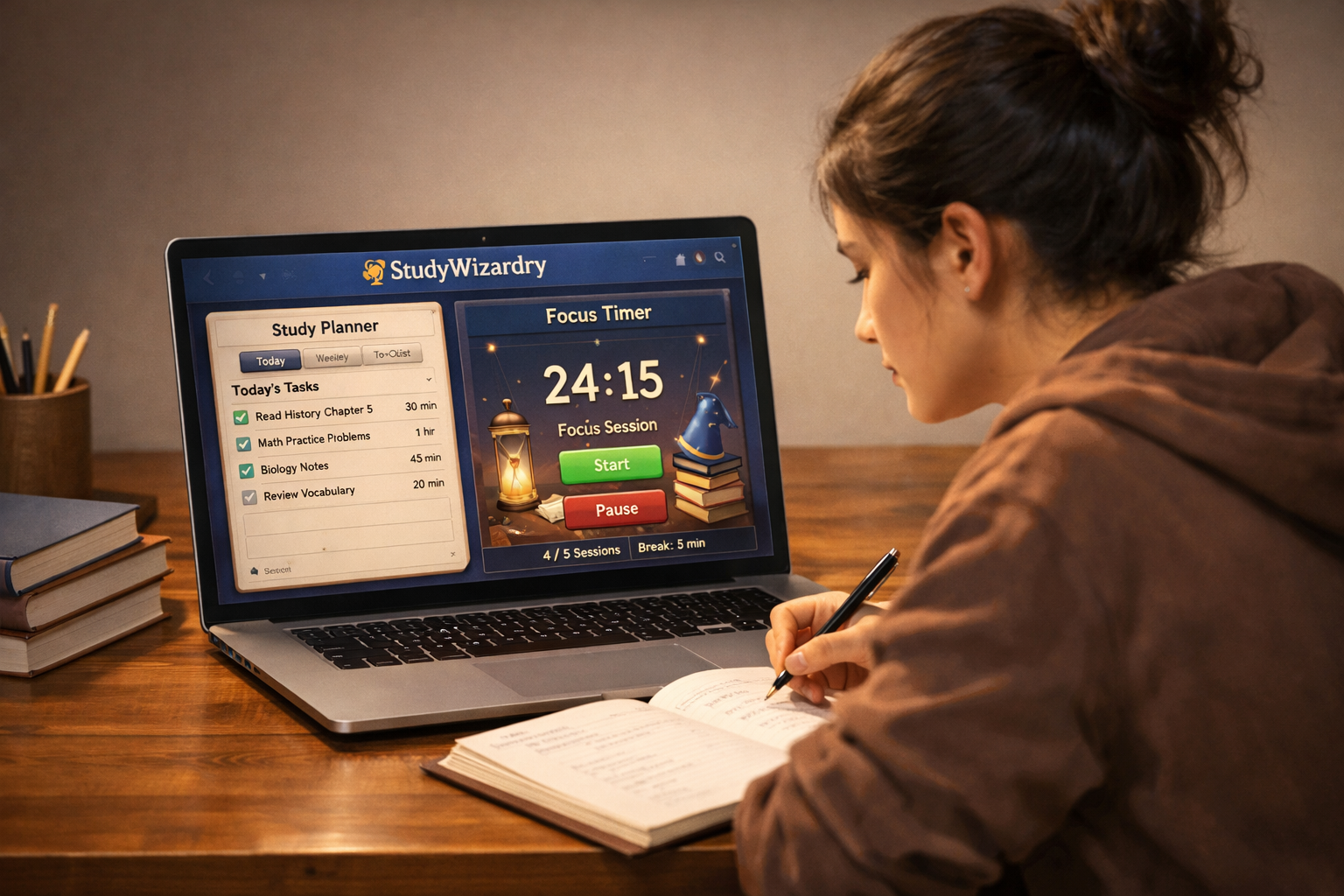
The Action: This is where technique meets technology. Use a Pomodoro Timer not just as a clock, but as a ritual trigger. Activate “Focus Mode” or “Do Not Disturb” on all devices. The key is integrating this with your planner: in StudyWizardry, launching a Pomodoro session for a pre-defined task from your AI Study Planner signals to your brain, “For the next 25 minutes, only this exists.”
-
The Outcome: You create a contractual, time-bound container for your attention. The temptation to “just quickly check” something is overruled by the active timer and the visual commitment on your plan.
⏱️ Master the core technique: Layer 2 relies on flawless execution of focused sprints. Our ultimate guide, “The Pomodoro Hack: Engineering Your Brain’s ‘Flow State’ On Demand,” breaks down how to transform a simple timer into a powerful cognitive protocol.
Layer 3: The Inner Filter – Direct Your Cognitive Energy Purposefully
This is the most crucial layer. It answers the question: “When my focus is protected, what should I actually do with that mental power?” The answer: active, engaged tasks that leave no room for stray thoughts.
-
The Action: Immediately use the clean information from Layer 1 to fuel active recall in Layer 3. Don’t just re-read your AI-generated notes. Turn them into Flashcards. Use the Quiz/Test Generator to create a quick, custom practice test on the spot. Explain the concept aloud as if teaching it.
-
The Outcome: Your brain is so actively occupied with retrieving, applying, and synthesizing information that there’s no cognitive bandwidth left for distraction. You’re not just resisting temptation; you’re making it irrelevant by being deeply engaged.
🧠
Ready to Supercharge Your Inner Filter (Layer 3)?
Layer 3 is all about directing your energy into active, high-impact tasks like flashcards. But what if your flashcards themselves are the bottleneck? If they feel generic, boring, or ineffective, you’re still wasting precious cognitive resources.
The next level is to stop using flashcards as a generic tool and start designing them as a perfect interface for your unique brain. Are you a systematic “Coder,” a narrative “Storyteller,” or a relational “Pattern-Spotter”? Each cognitive style needs a different flashcard blueprint.
🚀 Take Your Flashcards to the Next Dimension:
In our deep-dive guide, “Your Brain’s UI: Designing Flashcards for Your Unique Cognitive ‘Operating System’”, we provide the exact diagnostic and blueprints you need to build flashcards that feel intuitive, efficient, and incredibly sticky. It’s the ultimate companion to executing Layer 3 with surgical precision.
📅 Part 3: Your One-Week “Focused Intelligence” Protocol
Theory is useless without practice. Implement this system over the next week:
| Day | Layer 1 (Automate) | Layer 2 (Contain) | Layer 3 (Direct) |
|---|---|---|---|
| Mon | Summarize tomorrow’s lecture slides. | 2x Pomodoro sessions on the summary. | Generate & answer 5 quiz questions from it. |
| Wed | Process a dense textbook section into bullet points. | 3x Pomodoros in deep focus mode. | Create flashcards for key definitions. |
| Fri | Condense a week’s notes into a one-page review sheet. | 4x Pomodoros for final review. | Do a full topic recall without notes. |
✅ Conclusion: From Digital Distraction to Digital Leverage
The end goal of a digital detox for the mind is not a life offline, but a mind online and in control. By building your Digital Immune System, you stop fighting against technology and start leveraging it to do the heavy lifting of organization and administration. This frees up your highest cognitive functions—critical thinking, creativity, synthesis—for the deep work that truly matters.
You transform your devices from sources of endless interruption into curated portals for focused work. Start tonight: pick one task, apply one layer, and experience the clarity that comes when your tools truly serve you, and not the other way around.
No, if used correctly as part of this system, they do the opposite. The AI acts as an advanced filter, removing the cognitive load of sifting through repetitive or fluffed text. This gives you a clean, structured foundation. The deep learning happens in Layer 3, when you actively engage with that refined material through flashcards, self-testing, and explanation. The AI handles the initial processing so you can dedicate your mental energy to the high-value work of mastery.
The key is to predefine and communicate. Before starting, define what constitutes a "true emergency" (it's rarer than you think). Inform close friends, family, or project partners of your focus schedule. For peace of mind, you can use modes that allow calls from specific contacts or repeat callers. This minimizes genuine interruptions while training your network to respect your deep work time. The occasional urgent matter can be paused for, but the system prevents the constant drip of the non-urgent.
Start with a "Focus Sprint." Commit to just 25 minutes. Close every single tab and app not needed for one specific task. Use a basic timer (even your phone on airplane mode). Work only on that task. This single, clean victory breaks the cycle of overwhelm and proves to your brain that focused work is possible. Tomorrow, you can build on it by adding one element from Layer 1 (e.g., summarizing before you start) or Layer 3 (creating a quiz after).