
Trust Issues: When Your AI Study Buddy Hallucinates
You finally feel ahead. Your AI just generated a flawless, detailed explanation of the Krebs cycle for your biology paper, complete with dates and scientist names. You copy a key sentence, cite it as “AI-generated analysis,” and submit. A week later, your professor’s comment is circled in red: “This claim about Otto Krebs is factually incorrect. Please verify your sources.” A cold pit forms in your stomach. You’ve been failed by a fiction, confidently delivered.
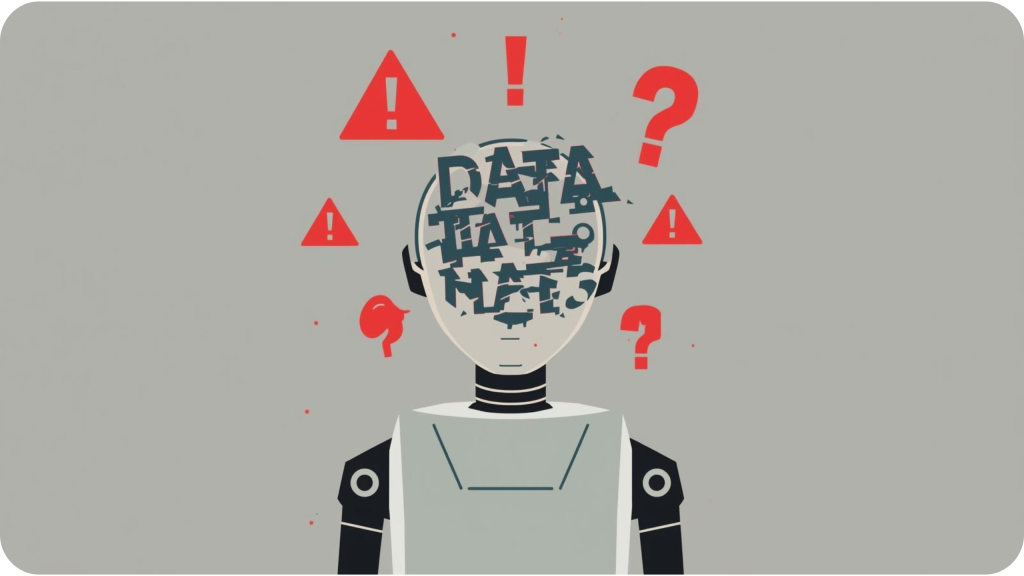
This isn’t a futuristic fear; it’s a daily reality in modern studying called AI hallucination. It’s when your chatbot, tutor, or solver invents information—dates, formulas, quotes, sources—with complete, persuasive certainty. In the rush to finish assignments, we’ve traded one problem (not knowing) for a more insidious one: not knowing we’ve been misled.
The next evolution of the “AI-powered student” isn’t about asking better questions. It’s about developing critical defense mechanisms. This guide provides you with five strategic frameworks to transform from a passive consumer of AI output into an active, skeptical detective. You’ll learn to fact-check, pressure-test, and synthesize, ensuring the knowledge you build is real, reliable, and ready for any exam or professor’s scrutiny.
Part 1: Why Your AI Helper Invents Facts & How to Spot It
AI tools like chatbots and solvers are not databases; they are prediction engines. They generate the most statistically likely next word in a sequence. Sometimes, the most likely sequence is a compelling lie. This is especially true for niche academic topics, recent events, or specific numerical data.
Common “Hallucination” Red Flags in Study Sessions:
- Too Perfect or Vague Citations: Mentions a “seminal 2015 study by Smith et al.” that doesn’t exist.
- Plausible-Sounding Inaccuracies: Swaps the dates of historical events or misattributes a quote.
- Overconfidence on Complex Nuance: Presents a simplified, definitive answer to a topic still debated by scholars.
- Inconsistent Details: Changes specific details (like a formulaic constant) when asked the same question twice.
The solution isn’t abandoning AI. It’s augmenting your own judgment. The following prompts aren’t just commands for the AI; they are scaffolds for your own critical thinking, designed to surface truth and expose uncertainty.
Part 2: The 5 Critical Thinking Frameworks for the AI-Powered Student
Move beyond simple queries. These frameworks turn your AI session into a collaborative investigation.
🕵️♂️ Framework 1: The “Source Detective” Prompt
Goal: Force the AI to substantiate its claims or reveal its limits.
Core Instruction: *“You just stated that [Claim]. Before I use this, I need to verify it. Act as a research assistant. Provide 2-3 specific, credible, and citable academic sources (peer-reviewed journal articles, authoritative textbooks) that support this exact claim. Format them in [APA/MLA] style. If you cannot find strong, verifiable sources, clearly state: ‘This claim may require further verification from primary academic databases.’”*
Why It Works: This prompt calls the AI’s bluff. It shifts the task from generation to verification. A hallucination will crumble here, either producing fake citations or admitting uncertainty. For a student using an AI Note Maker, this prompt can automatically append a “source check” section to any summarized notes, building a vital habit of academic integrity.
💡 Put It Into Practice with StudyWizardry: To streamline this, use StudyWizardry’s AI Note Maker. Paste the AI’s answer and the source list into a single, organized note. This builds a personal, verifiable knowledge bank, turning a quick check into a lasting study resource.
👩⚖️ Framework 2: The “Devil’s Advocate” Prompt
Goal: Stress-test an AI-generated argument to find its weak points.
Core Instruction: *“You provided this argument or essay outline about [Topic]. Now, switch roles. Act as a skeptical professor grading this work. Critique the logic. Identify: 1) The single weakest logical link and why it’s vulnerable. 2) One major counter-argument or opposing school of thought that isn’t addressed. 3) One potential overstatement or simplification. Do not fix these issues; just expose them.”*
Why It Works: It simulates peer review, training you to anticipate criticism—the hallmark of A+ work. By having the AI attack its own previous output, you get a free, pre-submission critique. This is invaluable when using an AI to draft essay outlines, forcing you to strengthen your work before you even write the first draft.
💡 Put It Into Practice with StudyWizardry: This critique is gold for revision. In StudyWizardry’s AI Note Maker, keep your draft and this feedback linked. This creates a clear revision map, helping you track how your argument strengthens from first draft to final submission.
🔄 Framework 3: The “Synthesis Cross-Examiner” Prompt
Goal: Compare multiple AI outputs or sources to triangulate the truth.
Core Instruction: “I have two different explanations for [Concept]. Explanation A: [Paste A]. Explanation B: [Paste B or ask for a new one]. Perform a comparative analysis. Where do they fundamentally agree? Where do they contradict or differ in emphasis? Based on the preponderance of logical evidence and consistency, synthesize one coherent, accurate summary that resolves any conflicts.”
Why It Works: Hallucinations often fail the consistency test. By prompting the AI to analyze its own inconsistencies, you leverage its pattern-matching strength for verification. This is perfect for complex topics. Imagine using your Homework Solver on a calculus problem, then asking a general chatbot the same thing, and using this prompt to compare methodologies.
💡 Put It Into Practice with StudyWizardry: Manually comparing texts is inefficient. Use StudyWizardry’s PDF Summarizer on different sources to quickly extract core arguments. Then, paste these summaries side-by-side in the AI Note Maker to visually analyze agreements and contradictions with ease.

🎓 Framework 4: The “ELI5 & Explain the Why” Validator
Goal: Test if you (and the AI) truly understand a concept at its core.
Core Instruction: *“First, explain the concept you just provided as if I’m a smart 10-year-old (ELI5). Use one simple, concrete analogy. Now, based only on that simple analogy, generate one ‘why’ or ‘how’ question that probes the underlying mechanism. Finally, answer that deep ‘why’ question in academic terms.”*
Why It Works: This operationalizes the Feynman Technique. If the AI’s simple analogy is flawed, its deep understanding is fake. This prompt forces a check for conceptual coherence from the ground up. It’s a brilliant way to use AI to study; it creates a simple study guide (the analogy) and a practice exam question (the “why”) in one move.
💡 Put It Into Practice with StudyWizardry: Cement this learning by turning the AI’s “why” question into an active recall tool. Create a flashcard in StudyWizardry’s Flashcards system with that question. The built-in Spaced Repetition algorithm will then schedule optimal reviews to lock the insight into long-term memory.
📊 Framework 5: The “Self-Assessment Quizzer” Prompt
Goal: Turn AI-generated content into a tool to assess your own critical understanding.
Core Instruction: *“Based on the study notes/essay you just generated on [Topic], create a 5-question quiz. The rules: Questions must NOT be simple fact recall. They should assess 1) Application of concepts to new scenarios, 2) Identification of potential weak points within the material itself, and 3) Synthesis of ideas. Provide an answer key that explains the reasoning for each correct answer.”*
Why It Works: It makes the AI work for you in the highest domain of learning: evaluation. Instead of just consuming notes, you’re actively interrogating them. This is where an app’s Quiz Generator can be supercharged. You’re not just testing memory; you’re training yourself to spot what might be missing or overstated in the source material—a direct defense against hallucinated “facts.”
💡 Put It Into Practice with StudyWizardry: Skip the manual quiz creation. Use StudyWizardry’s Quiz Generator on your verified notes. It instantly creates practice questions to test application and analysis. Schedule these quizzes within the AI Study Planner to make this critical self-testing a regular part of your review sessions.

Part 3: Building Your Personal Verification Protocol
Don’t use all five prompts every time. Build a workflow:
-
For New, Complex Concepts: Start with the ELI5 Validator (4) to build intuitive understanding, then use the Source Detective (1) on key claims.
-
For Essay & Argument Building: Generate an outline, then immediately run it through the Devil’s Advocate (2). Use the critique to revise.
-
Before Finals: Use the Synthesis Cross-Examiner (3) on your course notes and textbook chapters, and the Self-Assessment Quizzer (5) to create your final practice test.
The goal is to make critical verification a seamless part of your study loop, not an extra step.
Conclusion: From Blind Trust to Confident Partnership
The most powerful study tool isn’t the AI that gives you answers—it’s the educated skepticism you apply to them. By adopting these frameworks, you stop being a customer of AI output and become a manager of AI-assisted reasoning.
Your AI study buddy isn’t infallible. It’s a incredibly powerful, but sometimes unreliable, collaborator. Your job is to bring the human judgment—the curiosity, the caution, the critical eye. That partnership is unstoppable.
Start your next study session with a question, but end it with verification. Choose one prompt from this guide and apply it to the next piece of AI-generated help you receive. That moment of scrutiny is where true, durable learning begins.
Your Journey from Consumer to Manager: Adopting these frameworks turns you into a project manager for your learning. Tools like StudyWizardry are designed for this role—its AI Note Maker, Flashcards, Quiz Generator, and smart Planner work together to help you build, verify, test, and master knowledge systematically. The goal is a personalized system where technology supports your critical thinking, not replaces it.
Initially, yes—it adds a layer. But it saves immense time and pain in the long run by preventing you from learning incorrect information, failing assignments due to false citations, or building a shaky knowledge foundation. It turns study time from passive consumption into active, engaged skill-building (critical thinking) that benefits every subject.
The point is elevation, not replacement. AI excels at brainstorming, explaining from different angles, creating structure, and generating practice material. These prompts leverage those strengths while guarding against its fundamental weakness (invention). You're using AI to do the heavy lifting of drafting and exploring, while you focus on the highest-order tasks of judgment, synthesis, and verification.
Yes. Subjects requiring the most precise, up-to-date, or niche factual knowledge are highest risk: History (specific dates, quotes), Sciences (numerical constants, recent study findings), Medicine/Law (procedures, statutes). Subjects focused on conceptual understanding, theory, or language practice carry lower but still present risk. The verification frameworks are essential for all.