What I Wish I Knew About Procrastination: 4 Truths That Finally Helped Me Stop Stalling
I spent the first two years of college believing I was lazy.
Not the cute, self-deprecating kind of lazy. The kind that made me stare at a blank document for four hours, feel my chest tighten, and then open TikTok “just for five minutes.” The kind that turned 8 PM assignments into 3 AM panic sessions. The kind that made me wonder if I was simply not cut out for this.
I tried every fix. Pomodoro. Forest app. Website blockers. Color-coded planners. I even bought a $70 productivity journal that now sits untouched on my shelf. Nothing stuck.
Then, slowly, I started noticing why I procrastinated. Not the surface reasons—not “I’m lazy” or “I have no discipline.” The real reasons. And once I understood those, the cycle broke.
Here are four truths I wish someone had told me before I wasted hundreds of hours running in place.
⏳ Truth #1: I Wasn’t Avoiding Work. I Was Avoiding Discomfort.
Every time I delayed starting a paper, I told myself I was avoiding effort. But effort wasn’t the problem. I could spend three hours scrolling Reddit—that’s effort. I could worry about the assignment for an entire weekend—that’s exhausting effort.
What I was actually avoiding was the feeling of not knowing how to start.
Uncertainty feels physically uncomfortable. Your brain perceives it as a threat. So it seeks certainty elsewhere—checking email, organizing notes, watching one more explainer video. These feel like progress. They’re not. They’re avoidance dressed in productivity clothes.
What finally helped: I stopped waiting to “feel ready.” Readiness is a myth. I gave myself permission to write the worst first paragraph in human history. No one was going to grade my first draft. I could always delete it. But I couldn’t edit a blank page.
Try this: Next time you’re stuck, set a 5-minute timer and write absolute garbage. Complete nonsense. The goal isn’t quality—it’s proving to your brain that starting won’t kill you.
🧠 Truth #2: Willpower Is a Limited Resource, But Systems Aren’t
For years, I believed productive people simply had more willpower. They woke up at 5 AM, crushed their to-do lists, and never felt tempted by Instagram.
This is a lie. Productive people don’t have superhuman discipline. They have systems that make discipline unnecessary.
Every time you rely on willpower to start a task, you’re gambling. Some days you win. Most days, when you’re tired, hungry, or stressed, you lose. A system removes the gamble.
What finally helped: I stopped asking “Do I feel like studying?” and started asking “What does my study plan say I’m doing right now?”
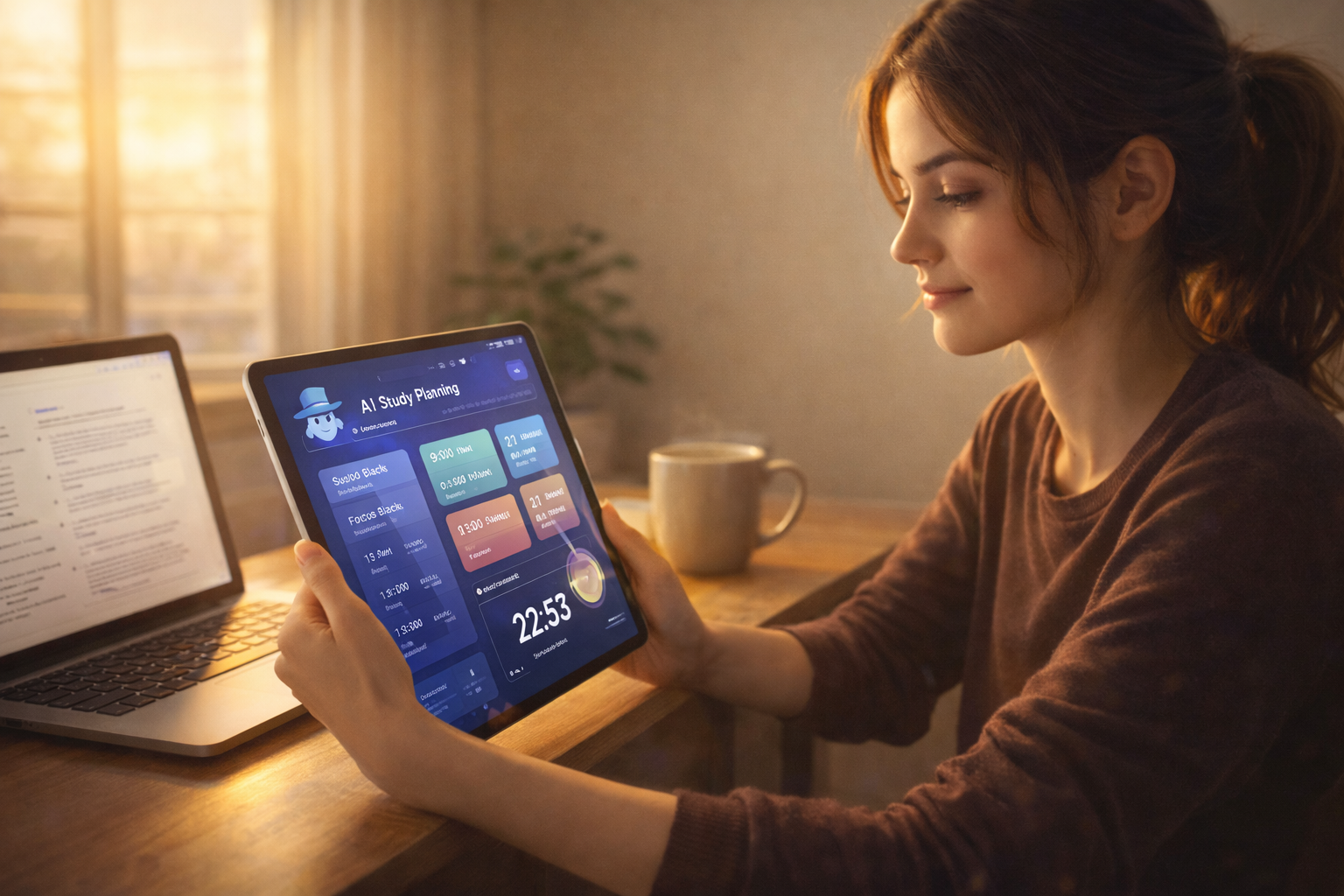
This is where I started using StudyWizardry‘s AI Study Planner differently. Instead of treating it as a fancy to-do list, I treated it as a commitment device. I scheduled my study blocks a week in advance—not as suggestions, as appointments. When 3 PM arrived, the decision was already made. I didn’t have to negotiate with myself. I just followed the plan my past self had set.
Try this: Schedule your three most important study sessions for the week right now. Put them in your calendar. Treat them like mandatory meetings with a professor. When the time comes, don’t ask “should I?”—just start.
🗓️ Deepen your system: The principle of “systems over willpower” is the foundation of sustainable productivity. Our guide, “Stop Fighting Your Body Clock: The Smarter Path to Academic Success,” shows you how to align these scheduled blocks with your natural energy peaks for even less resistance.
🔁 Truth #3: Perfectionism and Procrastination Are Twins
I used to think perfectionists were overachievers who stayed up late polishing every sentence. I wasn’t a perfectionist. I couldn’t even write the first sentence.
Then I learned that perfectionism doesn’t look like excellence. It looks like paralysis.
If you believe your work must be flawless, starting feels terrifying. What if it’s not good enough? What if you embarrass yourself? What if the final product doesn’t match the ideal in your head? So you wait. You wait until the deadline creates enough pressure to override the fear. Then you rush, produce something mediocre, and confirm your suspicion: “See? I can’t do this properly.”
What finally helped: I started treating my first attempt as a “draft zero.” Not a first draft—that still sounds too official. Draft zero is just you thinking on paper. No one else will see it. It can be fragmented, messy, and wrong. You’re not writing; you’re just unloading your brain.
Try this: Before you open a blank document, open your AI Note Maker and dictate everything you know about the topic for 2 minutes. Don’t organize it. Don’t judge it. Just dump it. Now you have raw material to work with, not a terrifying void.

🧩 Truth #4: Motivation Is a Feeling. You Don’t Need It.
This was the hardest truth to accept. I spent years waiting for motivation to strike—for that magical morning when I’d wake up excited to study organic chemistry.
That morning never came.
Motivation is not a prerequisite for action. Action is a prerequisite for motivation. The neurochemistry of “feeling motivated” often follows engagement, not the other way around. Once you start, momentum builds. Dopamine releases. The task becomes easier.
What finally helped: I made a rule: I could always quit after 10 minutes. If after 10 minutes of focused work I still felt unbearable resistance, I could stop with zero guilt.
I almost never stopped. Because the hardest part isn’t the 10 minutes. It’s the 10 seconds of deciding to begin.
Try this: Use a simple Pomodoro timer—not for productivity, but as a “just start” contract. Commit to 10 minutes. After that, you have full permission to walk away. Most days, you won’t want to.
🍅 Master the start: The Pomodoro Technique is scientifically proven to lower the “activation energy” required to begin. Our complete guide, “The Pomodoro Hack: Engineering Your Brain’s ‘Flow State’ On Demand,” explains exactly why 10-25 minute sprints bypass your brain’s threat response.
🔄 The Honest Truth: I Still Procrastinate
I want to be clear: I didn’t cure myself. I still put things off. Some weeks are harder than others. There are still evenings when I open YouTube instead of my textbook.
But here’s what changed: I no longer believe it means something is wrong with me.
Procrastination isn’t a character flaw. It’s a response—to uncertainty, to fatigue, to fear, to unrealistic expectations. Once you stop treating it as a moral failure, you can actually address the root cause.
The students who “get things done” aren’t stronger or smarter. They’ve just learned to stop negotiating with themselves.
Start tonight. Open your planner. Block 25 minutes tomorrow for one task you’ve been avoiding. Don’t wait until you feel ready. You won’t. Do it anyway. That’s the whole secret.
No. Laziness is a lack of desire to act. Procrastination is the presence of desire to act, blocked by something—usually fear, uncertainty, or overwhelm. If you genuinely didn't care about the task, you wouldn't feel guilty about delaying it. Procrastinators care deeply; that's why it hurts.
Start smaller. If 10 minutes feels too long, start with 5. If 5 minutes feels too long, commit to opening the document and writing one sentence. If even that feels impossible, examine what you're avoiding. Is it the task itself, or the fear that your work won't be good enough? Often, the barrier is emotional, not logistical.
Tools help when they reduce decision fatigue. They hurt when they become another thing to optimize. A simple AI Study Planner that schedules your week and sends reminders removes the "what should I do now?" friction. But if you spend more time organizing the tool than using it, ditch the tool. The goal is fewer decisions, not more.