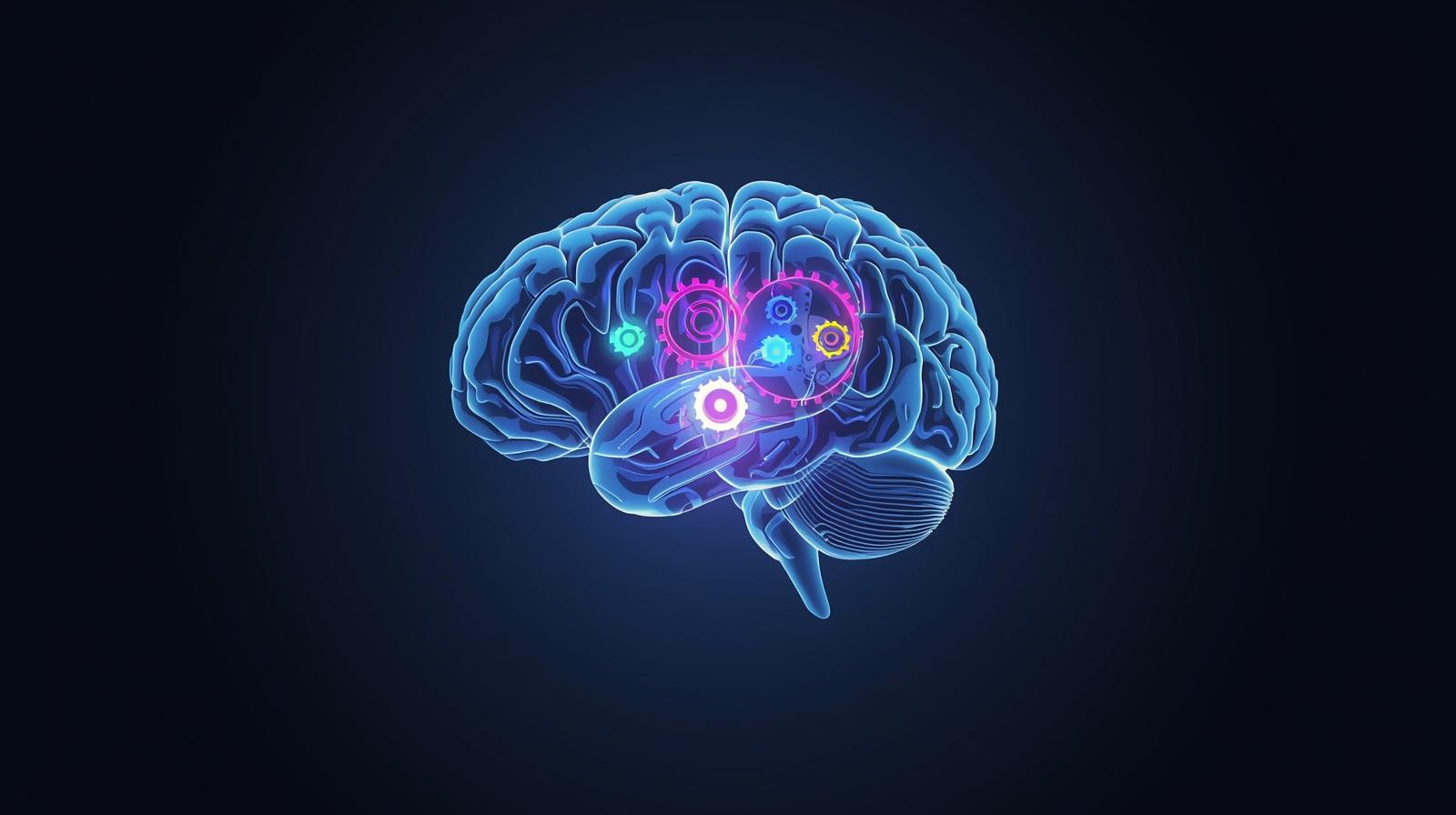
Beyond Willpower: The ADHD Focus Engine Theory for Effective Studying
Forget everything you’ve been told about “just trying harder.” If you have ADHD, you know that traditional study advice—break tasks down, use a planner, find a quiet room—often feels like trying to fit a square peg into a round, rapidly spinning hole. The frustration isn’t a sign of failure; it’s a sign that the advice is mismatched with your brain’s unique operating system.
This article isn’t another list of generic tips. Instead, we introduce the Focus Engine Theory, a practical framework built on the understanding of the ADHD nervous system. Think of your ability to focus not as a switch you can simply flip, but as an engine that needs the right fuel, the right maintenance, and the right conditions to run smoothly.
⚙️ How Your ADHD Focus Engine Really Works
The ADHD brain isn’t deficit in attention; it’s different in its regulation of attention. It’s powerful but operates on a distinct rhythm—often seeking high-interest, novel, or urgent stimuli. The Focus Engine Theory proposes three core components that must work in concert:
- Fuel (Motivation & Interest): This isn’t vague “willpower.” It’s the dopamine-driven engagement that starts the engine.
- Mechanics (Environment & Tools): These are the physical and digital structures that prevent breakdowns and reduce friction.
- Ignition (Activation & Transition): This is the often-invisible hurdle of starting or switching tasks, where many get stuck.
Understanding and optimizing these three components is more effective than fighting against them. This isn’t just a metaphor; research into the neurobiology of ADHD shows distinct differences in how the brain regulates attention, particularly in areas like the prefrontal cortex and the dopamine reward pathways.

⛽ Component 1: Fuel – Engineering Motivation and Interest
Since intrinsic motivation for mundane tasks can be unreliable, we must engineer it. This isn’t cheating; it’s adapting.
Link to High-Value Outcomes: Connect the study session to a personal, compelling “why.” Instead of “I need to study biology,” frame it as: “Understanding this chapter on neurotransmitters will literally help me understand my own brain.” Write this connection down before you start.
Create Novelty and Challenge: Boredom is the engine’s kryptonite. Use techniques like:
- The Pomodoro Remix: Ditch the standard 25 minutes. Try 15-minute ultra-sprints with 5-minute breaks, or a 45/15 split. Use a visual, satisfying timer.
- Role-Play: Teach the material to an imaginary (or real) audience. Pretend you’re a documentary narrator explaining the topic.
Leverage Urgency (Safely): Simulate positive pressure. Use body-doubling—study alongside a friend (virtually or in person) using video or just a shared timeline. The gentle social accountability provides the external stimulus your engine might need.
🛠️ Component 2: Mechanics – Designing a Frictionless Environment
Your environment can either constantly sabotage your engine or keep it humming. Design for your ADHD, not against it.
The Sensory Audit Table
| Sensory Input | Common Distraction | ADHD-Friendly Adjustment |
|---|---|---|
| Sound | Sudden noises, distracting music. | Use consistent, non-intrusive sound: white noise, brown noise, or instrumental lo-fi beats. Noise-cancelling headphones are a worthy investment. |
| Sight | Visual clutter, phone notifications, open browser tabs. | Create a minimalist workspace. Use physical dividers. Have only one tab/browser window open. |
| Touch & Movement | Physical restlessness, uncomfortable seating. | Incorporate active seating (exercise ball, wobble cushion). Keep a fidget toy off-camera for virtual sessions. Schedule intentional movement breaks (jumping jacks, a quick walk). |
Tool Strategy: Go for low-barrier, high-reward tools. A giant planner can feel oppressive. Instead, use:
- A large whiteboard for daily “brain-dump” and one central task.
- A simple, repetitive habit-tracking app for streaks.
- Color-coding with sticky notes for different subjects or priorities.
The key is integration. Instead of a dozen separate apps, a unified platform like StudyWizardry can streamline the process. Its AI Study Planner can break down your syllabus into manageable blocks, its Flashcards and Quiz Generator leverage active recall, and its AI Note Maker can transform messy lectures into structured outlines—all feeding into a single progress tracker. This reduces the ‘tool friction’ that often derails the ADHD brain.
🚀 Component 3: Ignition – Mastering the Art of Starting
This is the most critical phase. The engine is cold; you need a reliable starter.
The 5-Minute Candle Ritual: Tell yourself you will work on the task for just five minutes. Literally light a candle or set a very short timer. The act of starting is the only goal. Often, momentum takes over once the engine is running.
Pre-Crastinate Preparation: The night before, don’t just plan what to study. Perform the first physical action. Open the textbook to the right page. Lay out your notebook and favorite pen. Open the relevant software and document. This reduces the activation energy required the next day.
Bridge from a High-Dopamine Activity: Transition directly from something you enjoy (a great song, a brisk walk, a fun phone call) into your study session. Don’t let a dead-zone of scrolling fill the space in between.
🧠 Want to go deeper? If emotional blocks like math anxiety are affecting your motivation (Fuel) or ability to start (Ignition), our dedicated guide, How to Overcome Math Anxiety: A 5-Step Plan, offers research-backed strategies to address this specific challenge.
🔄 Syncing with Your Natural Rhythm: The Flow State Cycle
The ultimate goal is to achieve a state of flow—where time falls away and focus is effortless. For the ADHD brain, this is possible but follows its own cycle:
-
The Struggle Phase (Ignition): Accept the initial 5-10 minutes of resistance. This is normal.
-
The Release Phase (Fuel Engagement): As the engine warms up and your interest-engineering kicks in, focus begins to build.
-
The Flow Phase (Peak Performance): This is your golden window. Protect it fiercely. Mute everything. Let it ride.
-
The Depletion Phase (The Dip): Energy and focus will inevitably drop. This is your signal to take a break—not to push through in frustration. A proper 10-15 minute break is part of the cycle, not a deviation from it.
An AI-powered study planner that uses principles of spaced repetition can help you schedule review sessions and new material in harmony with this natural cycle, not against it, by allocating intense focus tasks to your predicted peak times. Honor this cycle. Pushing far past depletion leads to burnout and makes the next ignition much harder.
🔧 When the Engine Sputters: Your 3-Step Reset Protocol
Let’s be real: even with the best system, your focus will wander. The true measure of success isn’t preventing every distraction—it’s how quickly and effectively you recover. This is your pre-planned, no-guilt Reset Protocol. Think of it not as a failure, but as a standard, vital maintenance procedure for your mental engine.
Here’s exactly what to do the moment you realize you’ve fallen down a rabbit hole:
1. The Gentle Pause (Not a Panic)
Stop. Simply say “Ah, I’m off track.” That’s it. No drama, no self-scolding. This neutral observation is your most powerful tool—it halts the energy drain of frustration and lets you pivot.
2. The Physical Reset (The Circuit Breaker)
You need a clean sensory break to interrupt the distraction loop:
- Stand up and shake out your hands for 10 seconds.
- Look out a window and name three things you see.
- Take three slow breaths, focusing only on the exhale.
This isn’t a break—it’s a deliberate system reboot.
3. The Micro-Re-Entry (The Graceful Restart)
Don’t try to leap back in. Set a timer for 90 seconds. Your only task is to re-read the last two sentences you understood, or write one question about the topic. This isn’t about output—it’s about reigniting the engine’s spark.
The Game-Changer: The 2-Minute Post-Session Audit
After studying, ask yourself: “What pulled me off course this time?” Was it:
-
A Fuel issue? (The task felt meaningless)
-
A Mechanics issue? (My phone buzzed)
-
An Ignition issue? (I never truly started the right task)
Write one sentence in a dedicated notebook. Over a week, patterns emerge. You’re not tracking failures—you’re collecting data to upgrade your system. Maybe you need different background noise, or to start sessions with a vivid “why.” This turns every interruption into a strategic insight.
Embracing this protocol transforms your relationship with distractions. They become momentary blips on your radar—expected, manageable, and rich with information—rather than catastrophes that derail your entire day.

💡 Conclusion: From Theory to Sustainable Practice
The Focus Engine Theory, powered by your compassionate Reset Protocol, moves you from fighting your neurology to working with it. You’re not building a rigid prison of productivity, but a flexible, self-aware system that learns and adapts. Your focus isn’t broken; it requires an intelligent operating manual and a smart recovery protocol.
Start small this week. Audit one component of your engine. And when you drift—which is inevitable—deploy your three-step reset with clinical calm. Observe, interrupt, re-enter.
True progress comes from this iterative cycle: optimize, observe, adapt. By mastering Fuel, Mechanics, Ignition, and Recovery, you transform study sessions from battles of will into a dynamic process of effective engagement. You stop chasing perfection and start cultivating resilient progress.
Finally, remember that you don’t have to build this system from scratch. Tools like StudyWizardry, which integrate planning, note-taking, flashcards, and progress tracking, are designed to support the very components of the Focus Engine Theory. The right technology should feel like an extension of your brain—reducing friction, not adding to it.
Probably not. The classic Pomodoro is a rigid structure that can clash with the ADHD brain's nonlinear focus cycles. This is why we recommend the "Pomodoro Remix." Experiment with shorter (10-15 min) or longer (45-50 min) work blocks, and crucially, with break activities that truly reset your brain (movement, not social media).
Internal distractions are often the most challenging. Use a "brain dump pad." Keep a notebook specifically for intrusive thoughts. When a worry about an unrelated task pops up, jot it down in one sentence. This act acknowledges and externalizes the thought, telling your brain, "It's captured, we can return to it later," freeing up cognitive space.
Perfect is the enemy of good. Focus on control within your control. Use high-quality noise-cancelling headphones with your chosen background sound. Create a portable "focus zone"—a specific lamp you turn on, a particular mug for tea, a foldable divider on your desk. These rituals signal to your brain, "It's focus time," regardless of the broader chaos.