Why Rereading Your Notes is a Waste of Time (And What Neuroscientists Recommend Instead)
It’s 2 AM. Your desk is littered with coffee cups, and your textbook is a mosaic of fluorescent yellow highlights. You’ve just spent the last three hours rereading the same chapter on macroeconomic theory, again and again. The concepts feel familiar. You think you’re prepared. But deep down, a nagging voice whispers: “Will I remember any of this tomorrow during the exam?”
If this ritual sounds agonizingly familiar, you’re not alone. And here’s the liberating secret: It’s not your fault. You’ve simply fallen victim to one of the most common myths in education: that passive review is an effective way to learn.
For decades, students have been relying on study methods that feel productive but are scientifically proven to be woefully inefficient for long-term retention. The biggest culprit? Rereading your notes and highlighting textbooks. This article isn’t just another study tips list. We’re going to dismantle this inefficient habit, explore the powerful neuroscience-backed techniques that actually work, and show you exactly how modern technology can help you implement them seamlessly.
Part 1: The Science of Why Your Favorite Study Method Fails You
The “Illusion of Knowledge” and Your Brain
When you reread your notes, you’re engaging in a passive cognitive process known as recognition. Your brain sees the information and thinks, “Ah, I know this.” This feeling of familiarity is seductive—it creates a false sense of mastery, what psychologists call the “illusion of competence.”
However, recognition is a low-level cognitive task. It’s very different from recall, which is the active, effortful retrieval of information from your memory without any cues. Imagine the difference between seeing a multiple-choice question with the right answer visible (recognition) versus having to write a full essay answer on a blank page (recall). The latter is infinitely more challenging and, crucially, more effective for learning.
The Forgetting Curve: Your Brain’s Natural Enemy
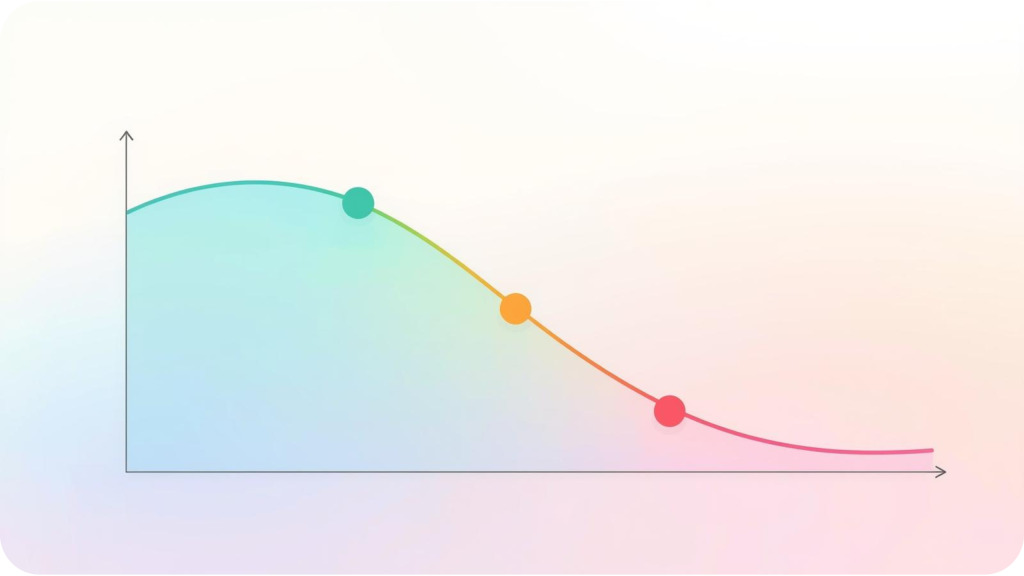
In the 1880s, German psychologist Hermann Ebbinghaus discovered the “Forgetting Curve,” a model that demonstrates how information is lost over time when there is no attempt to retain it. His research showed that we can forget up to 50% of new information within an hour and up to 70% within 24 hours.
Rereading does very little to flatten this curve. You might briefly push the information back into your short-term memory, but without a strategy to combat this natural decay, you’re fighting a losing battle. Your hours of “studying” are, in effect, just a slow-motion version of forgetting.
Now that you understand the science behind the forgetting curve, how can you actively combat it? Research shows that Spaced Repetition is the most powerful technique to flatten this curve. For a step-by-step guide on implementing this method to make knowledge stick, explore our dedicated article: Mastering Memory: How to Hack the Forgetting Curve for Academic Success.
Part 2: The Proven Path to Mastery: Two Neuroscience-Backed Techniques
So, if rereading doesn’t work, what does? Decades of cognitive science research point to two powerful techniques that, when combined, form the ultimate learning engine.
Technique 1: Active Recall – The Mental Weightlifting
Active Recall is the practice of actively stimulating your memory during the learning process. Instead of passively inputting information (rereading), you force your brain to output it (recall).
How it works: After learning a new concept, you close the book and try to explain it out loud, write down everything you remember on a blank sheet of paper, or test yourself with questions.
-
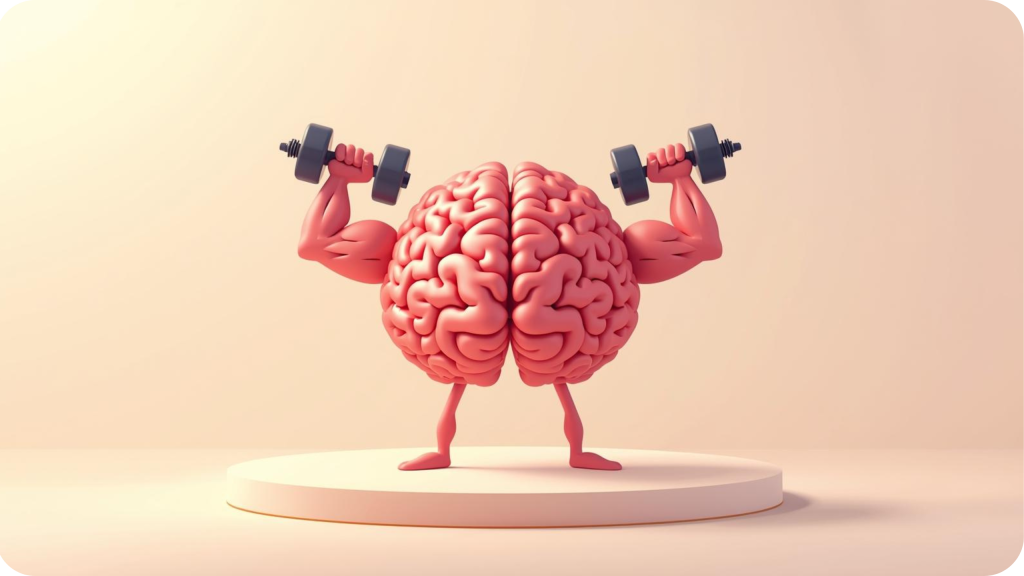
Why it’s powerful: The act of retrieval strengthens the neural pathways associated with that memory. Each time you successfully recall a piece of information, you’re telling your brain, “This is important! Secure it for the long term.” It’s the cognitive equivalent of weightlifting—the strain is what makes you stronger.
Technique 2: Spaced Repetition – The Art of Strategic Forgetting
Spaced Repetition is a learning technique that involves reviewing information at systematically increasing intervals. Instead of cramming all your review into one session, you space it out over days, weeks, and months.
How it works: You review a concept:
- First time: 1 day after learning
- Second time: 3 days later
- Third time: 1 week later
- Fourth time: 3 weeks later, and so on.
Why it’s powerful: This method is deliberately designed to interrupt the Ebbinghaus Forgetting Curve right as you’re about to forget something. Each successful recall at the point of near-forgetting dramatically slows down the decay of the memory, cementing it into your long-term knowledge base.
Part 3: The Modern Student’s Dilemma: “I Know What To Do, But I Don’t Have The Time!”
Understanding these techniques is one thing; implementing them is another. Let’s be brutally honest: traditional Active Recall and Spaced Repetition are logistically challenging.
-
Creating hundreds of high-quality flashcards for every subject by hand is incredibly time-consuming.
-
Manually planning a spaced repetition schedule for dozens of topics—knowing exactly when to review what—is a project management nightmare for any busy student.
This is the critical gap between theory and practice. You know you should be doing it, but the friction is too high. This is precisely where technology evolves from being a distraction to becoming your greatest academic ally.
Part 4: The AI-Powered Solution: A Step-by-Step Workflow for 2025
What if you could harness the power of Active Recall and Spaced Repetition on autopilot? The latest generation of AI-powered learning platforms is designed to do exactly that—remove the grunt work and let you focus on the actual learning.
Here is a seamless, integrated workflow that transforms how you study:
Step 1: Foundation – From Overwhelm to Clarity in 5 Minutes
The Tool: AI PDF & Video Summarizer
The Problem: You’re faced with a 50-page academic paper or a 2-hour lecture recording.
The Solution: Instead of passively consuming it all, you run it through an AI summarizer. In minutes, you have a concise, digestible summary of the key concepts, arguments, and data points. This isn’t about skipping work; it’s about creating a solid foundation and identifying what’s truly important before you dive deeper.
Step 2: Synthesis – Build Your Personal Knowledge Base
The Tool: AI Note Maker
The Problem: Your insights from the summary and subsequent reading are scattered and disorganized.
The Solution: As you work, the AI Note Maker helps you instantly transform key insights from the summary and your own thoughts into clean, well-organized, and actionable notes. It can help structure them, highlight connections, and create a searchable, personal knowledge library. This moves you from passive collector to active curator.
Step 3: Mastery – Practice Active Recall, Not Passive Review
The Tools: AI Quiz/Test Generator & Flashcards
The Problem: You don’t know what you don’t know. Passive review gives you false confidence.
The Solution: This is where the magic happens. You feed your beautifully organized notes into the AI Quiz Generator. Instantly, you have a custom, challenging practice test. This is pure Active Recall—forcing your brain to retrieve information without cues. It immediately exposes your weak spots.
Step 4: Strategy – Let Your Schedule Manage Your Memory
The Tool: AI Study Planner with Spaced Repetition
The Problem: You don’t have the time or mental energy to plan a perfect review schedule.
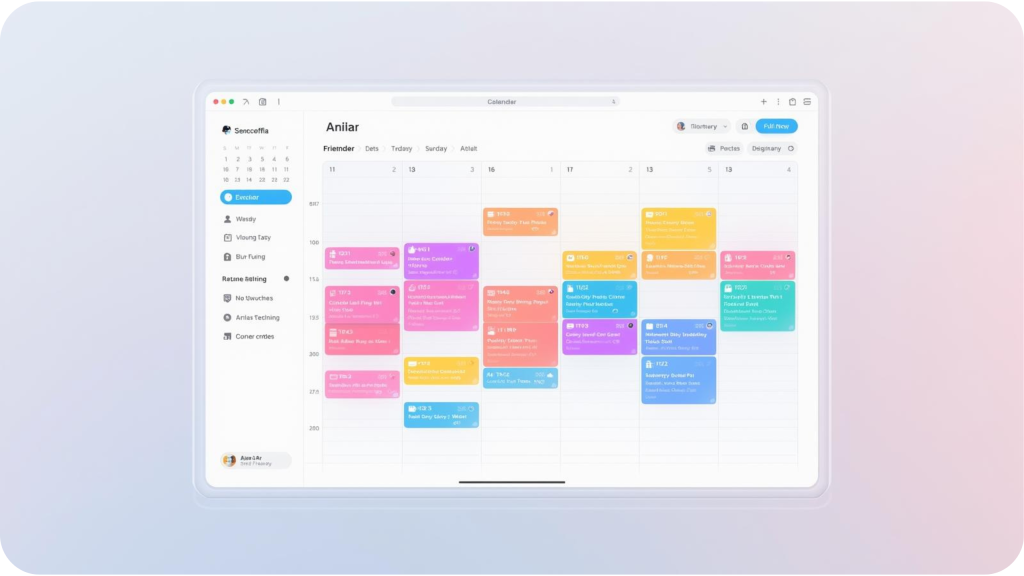
The Solution: The AI Study Planner acts as the intelligent command center for your learning. It’s more than a calendar; it’s a strategic partner.
- It analyzes your syllabus, deadlines, and goals.
- It uses your performance data from the quizzes and flashcards to identify your weakest areas.
- Most importantly, it automatically schedules your review sessions using spaced repetition algorithms. It tells you exactly what to review and when, ensuring you fight the Forgetting Curve with scientific precision, without you ever having to think about it.
Conclusion: The Paradigm Shift from Studying Hard to Studying Smart
The educational landscape is shifting. The students who will thrive are not those who can cram the longest, but those who leverage smart tools to implement proven learning science.
Rereading is a comfortable habit, but it’s a cognitive dead end. It’s like using a paper map when you have access to a real-time GPS. The path to true, lasting mastery has been charted by neuroscience, and it’s now paved by technology.
By embracing an integrated AI learning platform, you stop fighting against your brain’s natural tendencies and start working with them. You replace the anxiety of forgetting with the confidence that comes from knowing your knowledge is deep, durable, and ready to be recalled whenever you need it.
Ready to make the switch?
Stop working harder and start working smarter. Click below to discover how StudyWizardry can automate your path to academic mastery.
[Explore StudyWizardry’s AI-Powered Features]
According to decades of cognitive science research, the most effective study technique is the combination of Active Recall and Spaced Repetition. Active Recall involves actively retrieving information from your memory (for example, through self-testing), which strengthens neural pathways. Spaced Repetition involves reviewing information at strategically increasing intervals to combat the "forgetting curve." Used together, they are significantly more effective than passive methods like rereading or highlighting.
AI removes the major friction points that prevent students from using proven study techniques. Instead of spending hours creating flashcards and planning review schedules, AI tools can:
Instantly generate quizzes and flashcards from your notes for immediate Active Recall practice.
Automatically create a personalized study schedule that uses Spaced Repetition, telling you exactly what to review and when for optimal long-term retention.
Summarize long texts and help organize information, saving you hours of prep time.
This allows you to focus your energy on the actual learning rather than the tedious logistics.
Not at all. Think of it as a personal tutor and productivity coach, not a way to get answers. The goal of these tools is not to do your work for you, but to empower you to understand and learn the material more deeply and efficiently. They facilitate the process of studying—helping you organize, test, and reinforce your knowledge—so you can achieve true mastery on your own. You are still the one doing the learning; the AI is just optimizing the path.