I Studied 14 Hours a Day for a Month. Here’s What I Learned About Learning.
It started with good intentions.
Finals were eight weeks away, and I was behind. Not a little behind—the kind of behind where you avoid looking at your syllabus because the list of unread chapters feels like an accusation. So I made a decision. A drastic one.
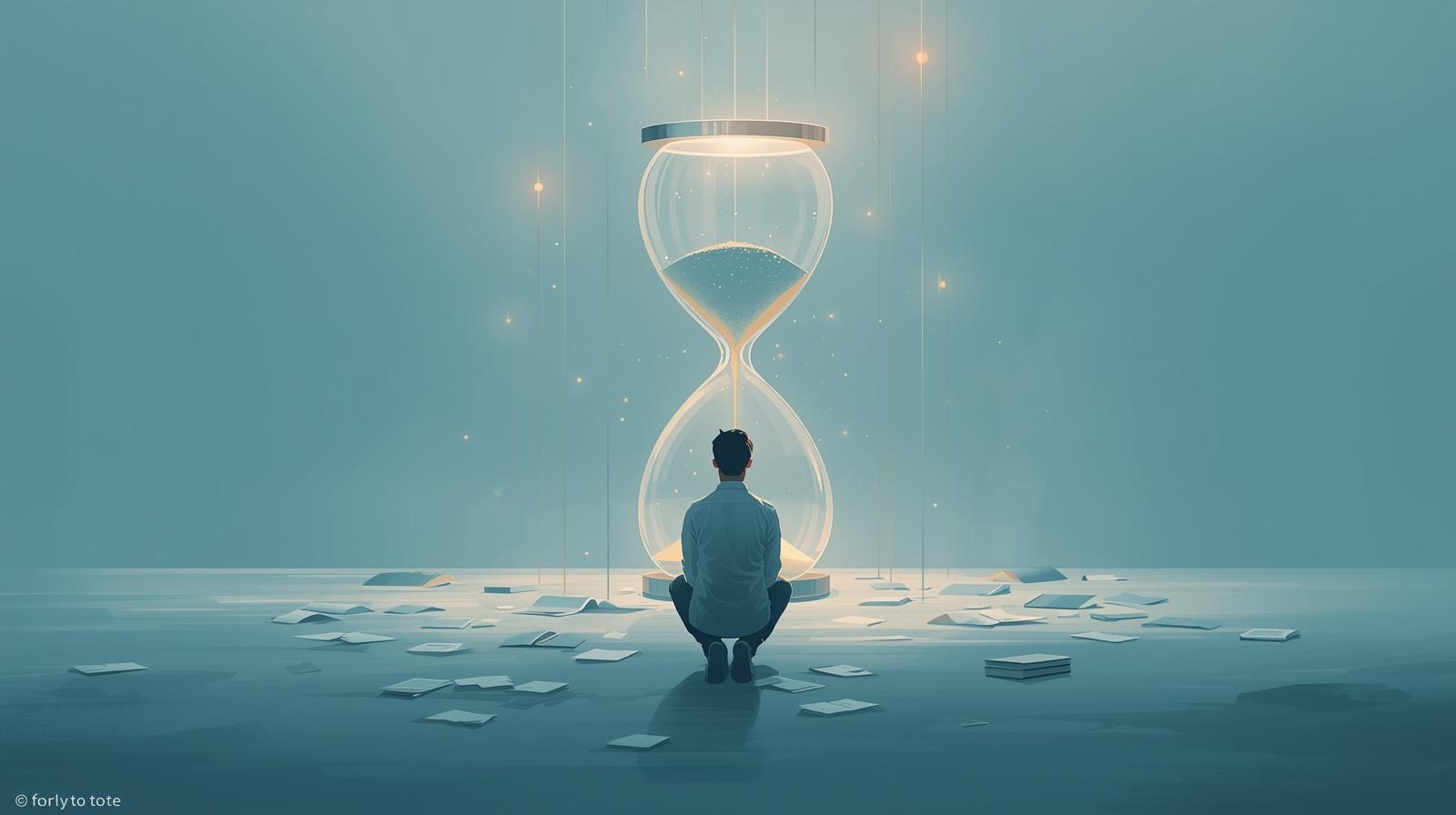
I would study 14 hours a day for a month.
No excuses. No breaks. Just me, my textbooks, and enough caffeine to fuel a small army. I told myself this was what successful people did. This was sacrifice. This was earning it.
By day three, I couldn’t focus.
By day seven, I hated every subject I was studying.
By day fourteen, I was sleeping four hours a night, crying in the library bathroom, and somehow further behind than when I started.
This is not a success story. Not yet. But it’s a true story about everything I got wrong—and the unexpected things I learned when I finally stopped trying so hard.
📚 Part 1: The 14-Hour Experiment
Let me be specific about what 14 hours looked like.
Wake up at 6 AM. Coffee. Textbook open by 6:30. Read, highlight, re-read until noon. Thirty-minute lunch break (phone off, just eating). Back to it until 6 PM. Dinner. Then 7 PM to midnight, reviewing everything I’d “learned” during the day.
Fourteen hours. Every single day.
The first three days felt productive. I was moving through material. Highlighters were being used. Notes were being written. I was doing the thing.
By day four, something shifted. I’d read a page and realize I had no memory of the previous one. I’d highlight a paragraph, then immediately forget what was in it. My eyes moved across the words, but nothing stuck.
By week two, I was exhausted in a way sleep couldn’t fix. Not just tired—hollow. Like someone had scooped out the part of me that cared about anything.
By week three, I started avoiding my own study space. I’d find reasons to be anywhere else. I’d convince myself that “organizing my notes” was studying. I’d watch YouTube videos about studying and count it as work.
By week four, I quit. Not dramatically—just quietly. I stopped setting the 6 AM alarm. I stopped pretending. And I sat with the uncomfortable truth that I had just spent a month doing something that made everything worse.
🧠 Part 2: What I Got Wrong (According to Actual Science)
Here’s what I didn’t know then.
Mistake 1: I Confused Time With Progress
The human brain is not designed for 14 hours of continuous cognitive work. Research shows that focused cognitive work depletes mental energy in ways that require recovery. After about four to six hours of intense focus, your brain’s ability to learn, retain, and process information drops significantly.
I wasn’t learning for 14 hours. I was learning for maybe four, then spending ten more hours pretending while actually reinforcing exhaustion.
Mistake 2: I Eliminated Rest
Sleep is when your brain consolidates memories. During deep sleep, your brain replays the day’s learning and transfers information from short-term to long-term storage. By sleeping only four hours, I was literally preventing my brain from doing the work of learning.
The hours I stole from sleep weren’t extra study time. They were theft from my own memory.
Mistake 3: I Mistook Activity for Achievement
Highlighting, re-reading, and passive review feel productive. They create the illusion of learning because you’re engaged with material. But cognitive science is clear: passive engagement creates weak memory traces. Real learning requires retrieval—forcing your brain to pull information out, not just look at it again.
I was doing the educational equivalent of watching someone else exercise and wondering why I wasn’t getting stronger.
Mistake 4: I Ignored Every Signal
My body told me to stop. My brain told me to stop. My emotions told me to stop. I interpreted all of this as weakness and pushed harder.
The research is now clear: emotional exhaustion isn’t a sign of weakness—it’s a sign that your system needs recovery. Ignoring it doesn’t build resilience. It builds burnout.
📚 The foundation matters: Understanding how your brain actually works is the first step to studying effectively. Our guide “Stop Fighting Your Body Clock: The Smarter Path to Academic Success“ explains why timing matters as much as effort.

🔬 Part 3: What Actually Works (That I Wish I’d Known)
After my 14-hour experiment failed spectacularly, I started actually reading the research. Here’s what I found.
The 90-Minute Limit
The brain operates in ultradian rhythms—natural 90-minute cycles of high focus followed by lower-energy periods. Trying to push past these cycles doesn’t work. You don’t get 14 hours of focus. You get a few good cycles and then diminishing returns.
What works: Study in 90-minute blocks. Then stop. Really stop. Walk away. Let your brain reset.
The Retrieval Effect
Every time you force your brain to recall information—without looking at your notes—you strengthen the neural pathways associated with that memory. This is called the testing effect, and it’s one of the most robust findings in learning science.
What works: After reading a chapter, close the book and write down everything you remember. Then check. The gaps show you what needs more work.
The Spacing Effect
Cramming creates short-term familiarity, not long-term memory. Information learned in one marathon session fades quickly. Information reviewed at intervals—one day, three days, one week, one month—becomes permanent.
What works: Use a system that schedules reviews for you. StudyWizardry’s AI Study Planner does exactly this—it tracks what you’ve learned and reminds you when to review it for optimal retention.
The Novelty Requirement
Your brain pays attention to what’s new. Reading the same notes twice in one day has diminishing returns because your brain says, “Seen this. Nothing new. Moving on.”
What works: Change how you review. Turn notes into flashcards. Explain concepts out loud. Draw diagrams. Create practice questions. Each new format forces fresh engagement.
🧠 Take it deeper: Active recall is the single most powerful learning technique. Our guide “Your Brain’s UI: Designing Flashcards for Your Unique Cognitive Operating System“ shows you how to build review tools that actually work.
📊 What I Do Now (That Actually Works)
Here’s my real schedule now. No heroics. Just sustainable.
| Time | What I Do | Why |
|---|---|---|
| Morning (90 min) | Hardest subject. Deep focus. No phone. | Brain is fresh; this is when real learning happens |
| Break (30 min) | Walk. Snack. No screens. | Let the brain consolidate |
| Midday (90 min) | Second subject. Active recall from morning. | Build connections, test understanding |
| Lunch (real lunch) | Away from desk. With people if possible. | Social connection matters for mental health |
| Afternoon (60 min) | Lighter work. Review. Organize notes. | Low-focus tasks that still need doing |
| Evening (off) | No studying. Books closed. | Brain needs recovery to learn tomorrow |
Total study time: about 5 hours. Results: dramatically better than 14.
🎯 What I Actually Learned
The 14-hour experiment taught me things no book could have.
I learned that exhaustion isn’t a badge of honor. For years, I’d worn tiredness like a medal. “I’m so busy” was my identity. But busy isn’t the same as effective, and tired isn’t the same as committed.
I learned that my brain has limits, and respecting them isn’t weakness. When I sleep eight hours, I learn more in four focused hours than I used to in twelve exhausted ones. The math is simple. The culture is what makes it hard.
I learned that sustainable beats intense every time. The student who studies five hours a day for a year will destroy the student who studies fourteen hours a day for a month and then burns out. Consistency compounds. Intensity collapses.
I learned that I was never the problem. The problem was a culture that told me more hours = better results. The problem was advice that ignored biology. The problem was me trying to be a machine instead of a person.
🍅 Start small: The Pomodoro Technique is perfect for rebuilding focus muscles. Our guide “The Pomodoro Hack: Engineering Your Brain’s ‘Flow State’ On Demand“ shows you how to structure 25-minute sprints that actually stick.
💬 The Honest Truth
I still have days when I fall back into old patterns. Days when I think I can power through, skip sleep, push harder. I still catch myself measuring my worth by hours logged instead of learning achieved.
But now I have something I didn’t have before: proof that the other way works.
I have data from my own life showing that less can be more. I have the experience of finishing a semester with better grades and more energy than when I was “trying harder.” I have the quiet confidence that comes from trusting a system instead of punishing myself.
The students who win aren’t the ones who study the most hours. They’re the ones who study the right hours, in the right way, with enough rest to let learning stick.
Start tonight. Look at your schedule for tomorrow. Block one 90-minute session for deep work on your hardest subject. Protect it like it matters—because it does. Then stop when it’s done. See what happens.
The 14-hour experiment failed. But that failure taught me something no success ever could: that I was never meant to be a machine. And neither are you.
📚 Further Reading: Build Your Sustainable Study System
📚
Your Focus Toolkit
The 14-hour experiment taught me what doesn’t work. These guides show you what does—practical, science-backed systems for focus, productivity, and sustainable learning.
Why Your Brain Keeps Losing Attention (And How to Fix It)
The science behind distraction and four practical strategies to reclaim focus.
Stop Trying to Focus. Start Designing for It.
A 5-layer system that makes distraction difficult and focus inevitable.
What I Wish I Knew About Procrastination
Four truths that finally helped me stop stalling and start doing.
Digital Detox for the Mind: How to Use AI Study Tools Without Losing Your Focus
How to use AI tools intentionally without losing your focus.
Find Your Golden Hours: How Your Chronotype Unlocks Deep Focus
Discover your chronotype and unlock your brain’s natural peak focus windows.
✨
Five guides, one system: Read them in any order—each one builds on the science-backed principles that finally replaced my 14-hour grind with sustainable, effective learning.
It can feel that way, but the research says no. When you're exhausted, your brain stops retaining information effectively. You're better off studying fewer hours with full focus and protecting your sleep. Four high-quality hours beats twelve exhausted ones every time.
Most brains can sustain about 4-6 hours of genuinely focused cognitive work per day. Beyond that, diminishing returns set in rapidly. The key is consistency: 5 focused hours daily for a month will outperform 14-hour bursts followed by burnout.
Your brain operates in natural cycles called ultradian rhythms. After about 90 minutes of intense focus, your cognitive performance drops. Pushing past this doesn't produce more learning—it produces exhaustion and frustration. Study in 90-minute blocks, then take real breaks.
Try the "retrieval test." After studying, close your book and write down everything you remember. If you can't recall key concepts without looking, you weren't learning—you were just reading. Real learning means you can explain it to someone else.
Start tonight. Look at your schedule for tomorrow and block one 90-minute session for your hardest subject. Protect that time like it matters—because it does. No phone, no distractions, just focused work. Then stop when it's done. That one change will teach you more than any article can.